Air Conditioning Contractor Services for Installation and Maintenance
Air conditioning has a sly way of becoming invisible until it misbehaves. When it works, nobody praises the condenser outside humming through a muggy afternoon. Nobody writes a thank-you note to the ductwork. Nobody raises a glass to correct refrigerant charge. But let one room turn into a sauna, let the system rattle like a shopping cart with one bad wheel, or let the thermostat behave like it has a grudge, and suddenly the air conditioning contractor becomes the most important person on the block.
That is fair. Heating, ventilation, and air conditioning work sits in that practical middle ground between comfort, safety, building performance, and mechanical common sense. A qualified air conditioning contractor is not just a person with a set of gauges and a van full of mysterious copper fittings. The trade covers installing, maintaining, and servicing heating and cooling equipment, and it often overlaps with related plumbing and electrical tasks tied directly to HVAC systems. The best contractors understand where the air conditioner ends and the rest of the building begins.
That boundary matters. A cooling problem can start as an airflow issue, a refrigerant issue, a control issue, or an electrical issue. A heating problem may involve furnace repair service, heat pump installation, or a heating contractor’s judgment about whether the equipment is correctly matched to the home or building. A comfort complaint may trace back to a duct layout, a poorly sized unit, or a maintenance history that reads like a tragedy in three acts: ignored filter, dirty coil, sad compressor.
There is no magic in good HVAC work. There is, however, method. And that method is what separates a proper installation or air conditioning tune-up from a quick visit that produces cool air today and an expensive noise next month.
What an air conditioning contractor actually does
An air conditioning contractor specializes in heating, ventilation, and air conditioning equipment. The core work is installation and maintenance, but the service menu often includes repairs, duct cleaning, and the plumbing or electrical work associated with heating and cooling systems. That last part is important because HVAC equipment does not live alone. It needs power, controls, drainage, airflow, and in some cases fuel connections or water connections. A system that looks like “just the AC” may involve an Electrician for electrical work, a Plumber for condensate or related piping concerns, or a Gas installation service when heating equipment enters the picture.
This is why the trades are grouped the way they are in practice. Plumbing, heating, and air conditioning are recognized as special trade contractor work, while electrical work is separately classified. On a real job, though, the systems speak to each other. A cooling system has electrical components. A furnace has controls, venting, and often fuel-related work. A heat pump handles both heating and cooling, which means it belongs in the conversation whether the customer calls asking for “AC service” or “no heat.”
That overlap can make the contractor’s role feel broad, but it should not feel vague. A serious contractor knows what they are licensed, trained, and certified to do, and when https://www.bing.com/maps/search?mepi=56%7E%7EEmbedded%7EAddress_Link&ty=18&v=2&sV=1&FORM=MPSRPL&q=Service+Lion+Plumbing+and+Rooter&ss=id.ypid%3AYN2C0EE5FA61CCB387&ppois=33.81737518310547_-117.85774230957031_Service+Lion+Plumbing+and+Rooter_YN2C0EE5FA61CCB387%7E&cp=33.817375%7E-117.857742&lvl=11&style=r a separate specialist is needed. Good judgment is not always about doing more. Sometimes it is about knowing exactly where the line is and not tap-dancing over it in muddy boots.
Air conditioning repair service is the emergency-facing side of the business. The call usually starts with something unpleasant: no cooling, weak airflow, warm air, strange cycling, ice formation, or a system that trips and quits. Maintenance is quieter. It is less dramatic and usually cheaper than panic. Installation is the big decision, the one that affects energy use, comfort, and reliability for years. A poor installation can make a fine piece of equipment behave like a bargain-bin appliance. A careful installation gives the system a fighting chance.
Installation is not “box swapping”
The most common misunderstanding about air conditioning installation is that it is mainly a replacement exercise. Old unit out, new unit in, collect invoice, everyone goes home. If only buildings were that polite.
Proper HVAC installation includes correct equipment sizing and correct refrigerant charging. Those two details sound plain, but they are where many future headaches are born. An oversized system can cool too quickly without managing comfort well. An undersized system may run hard and still fail to keep up. Incorrect refrigerant charge can increase energy use and raise the risk of failure. The system may still blow cold air for a while, which is how bad work gets away wearing a fake mustache.
Sizing requires more thought than matching the label on the old machine. The existing equipment may have been wrong from day one. The building may have changed. Rooms may have been added, insulation improved, windows replaced, or occupancy patterns shifted. A contractor should consider the actual heating and cooling needs rather than treating the old unit like sacred scripture.
Refrigerant charging is another place where skill shows. “Close enough” is not a proud standard in cooling work. Refrigerant is part of the heat transfer process, and the system depends on the right amount under the right conditions. Too little or too much can hurt performance. Proper charging helps reduce energy consumption and lowers failure risk. It is not glamorous, but neither is flossing, and both prevent expensive regret.
Then there is airflow. Equipment can be correctly sized and charged yet still suffer if the duct system cannot move air properly. Duct cleaning may be part of some service offerings, but cleaning alone does not fix every duct problem. A contractor has to look at the system as a whole: supply, return, filtration, blower operation, and room-to-room balance. Air is lazy. It will take the easiest path. Buildings punish assumptions.
The maintenance visit: where small problems confess
Air conditioning maintenance is not supposed to be theater. A technician should not stroll in, shine a flashlight at the unit, pronounce it “good,” and leave behind a sticker with heroic handwriting. A meaningful air conditioning tune-up looks for the quiet problems that shorten equipment life or waste energy.
Filters, coils, electrical components, drains, refrigerant conditions, and general operation all matter. Maintenance is also when the contractor can spot signs that a repair is coming. The goal is not to frighten the customer into replacing half the mechanical room. The goal is to read the equipment honestly.
A homeowner or building manager may think the system is fine because the space eventually gets cool. “Eventually” does a lot of suspicious work in that sentence. A struggling system can still deliver comfort while using more energy than it should or putting stress on components. Maintenance helps separate normal operation from mechanical denial.
There is also a rhythm to maintenance. Cooling equipment should be checked before the season of heavy use whenever possible. Heating equipment deserves the same respect before cold weather. Heat pump installation and maintenance add another wrinkle because a heat pump works in both heating and cooling modes. If it runs most of the year, it does not get much of a vacation. Machines, unlike people, do not recharge at the beach while pretending not to check email.
Here is a compact homeowner-friendly checklist that actually belongs on paper, because nobody needs a novel taped to the air handler:
- Replace or clean filters on the schedule appropriate for the system and building conditions.
- Keep outdoor units clear of debris and avoid blocking airflow.
- Pay attention to new noises, odors, short cycling, or weak airflow.
- Schedule maintenance before peak cooling or heating demand.
- Call for service when performance changes, rather than waiting for total failure.
That is one of the few lists worth keeping. It does not turn anyone into a technician, but it does keep obvious neglect from dressing up as bad luck.
Repair service: diagnosing before replacing
Air conditioning repair is where a contractor earns trust quickly or loses it permanently. Customers are often hot, annoyed, and braced for financial impact. The worst response is guesswork delivered with confidence. The second worst is replacing parts until the system gives up out of embarrassment.
A good air conditioning repair service starts with diagnosis. Is the system receiving power? Are controls calling correctly? Is airflow adequate? Are coils clean enough to transfer heat? Is the refrigerant side operating as it should? Are safety devices doing their job? Each answer narrows the field.
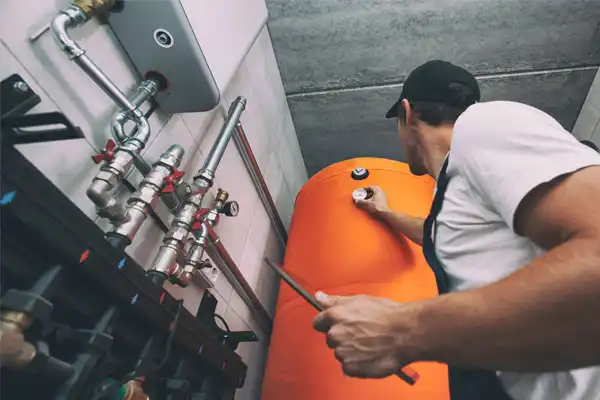
Electrical work connected to HVAC equipment can be part of the service picture, though electrical contracting is its own classification. That distinction matters. Some HVAC repairs involve components inside the equipment and its controls. Other problems may require an Electrician, especially if the issue is upstream from the HVAC system. A professional contractor does not pretend every breaker, wire, and panel belongs to them simply because the air conditioner is the machine complaining.
Repair also involves judgment about value. A small repair on a reasonably healthy system is easy to recommend. A costly repair on equipment with repeated failures invites a bigger conversation. The contractor should explain the condition, the likely benefit of repair, and whether replacement deserves consideration. The customer should not need a decoder ring to understand the options.
One awkward truth: not every failure is dramatic. Sometimes air conditioning maintenance was skipped, airflow was restricted, and the system labored until a component failed. Sometimes installation was weak from the beginning. Sometimes equipment simply wears. The honest contractor does not turn every failure into a morality play. Machines have finite patience.
The heating side of the same house
Cooling gets the spotlight during hot weather, but many contractors who handle air conditioning also work with heating systems. Furnace repair service, heating equipment installation, and heat pump installation all sit within the broader HVAC world. A Heating contractor may be called for no-heat issues, seasonal maintenance, or equipment replacement. In many homes and buildings, the heating and cooling systems share ducts, controls, air handlers, or maintenance concerns.
Furnace repair service can involve mechanical, electrical, and fuel-related considerations. Gas installation service belongs with qualified professionals because fuel connections are not a hobby. They are not a weekend puzzle. They are not something to “tighten and see how it goes,” unless the plan is to make the evening news for all the wrong reasons.
Heat pumps deserve special mention because they blur the old mental line between furnace and air conditioner. A heat pump can provide cooling and heating by moving heat rather than creating it the way a combustion furnace does. That means heat pump installation requires attention to both seasons of operation. Maintenance has to consider the reversing operation and the demands of year-round service. When a customer says, “It cools fine but struggles in heating,” or the reverse, the contractor has to think beyond a single mode.
The practical point is simple: choosing an air conditioning contractor often means choosing a long-term mechanical partner for the whole comfort system. It is not merely about who can show up on a hot Tuesday. It is about who understands the equipment when the weather changes sides.
Where plumbing enters the HVAC conversation
The keyword “Plumber” may seem like it wandered into an air conditioning article wearing the wrong name tag, but plumbing and HVAC often live close together in real service businesses. Plumbing, heating, and air conditioning are commonly grouped as special trade contractor work. That reflects reality. Many contractor businesses handle plumbing repair, heating, cooling, and related equipment service under one roof.
Condensate drainage from cooling equipment, water connections related to certain systems, and broader mechanical room service can bring plumbing knowledge into the picture. Separately, a customer who trusts a contractor for HVAC may also need Plumbing leak repair, Drain cleaning, Rooter service, Hydrojetting, Water heater repair, Water heater installation, Plumbing repiping, or Water softener installation. These are not the same as air conditioning installation, but they often appear in the same service ecosystem.
The benefit for a customer is coordination. If a mechanical room contains HVAC equipment, a water heater, piping, drains, and electrical connections, fragmented service can become a comedy of scheduling errors. One trade says it is another trade’s issue. The second trade says the first trade caused it. The customer stands there holding three invoices and a mop. A well-organized contractor does not erase the boundaries between trades, but it can coordinate work more cleanly.
Septic system service is another example of related home-service work that may sit near plumbing in the customer’s mind, though it is a distinct service area. The important thing is not to lump everything together carelessly. Air conditioning repair does not qualify a person to service every system in a building. The right contractor either has the proper capability or says, plainly, “That needs a different specialist.” Honesty is cheaper than overreach, at least until the lawyers arrive.
The electrical side, quietly running the show
Air conditioners need electricity. So do controls, blowers, pumps, and many heating system components. Even Plumber gas-fired heating equipment typically depends on electrical controls. This makes electrical competence essential around HVAC work, while still respecting that electrical work is separately classified.
A Lighting contractor may not be the person diagnosing a failed air conditioner, just as an air conditioning contractor may not be the right person redesigning a lighting system. Yet buildings do not care about trade categories. A voltage issue can affect HVAC performance. A control failure can look like mechanical failure. A tripped breaker may be symptom rather than cause. This is where professional restraint matters. The technician should know what to test, what to touch, and when the situation belongs to a licensed Electrician.
Customers sometimes ask for one person who can “just handle it all.” The impulse makes sense. Nobody wants a parade of vans. But competent contracting is not a talent show. The safe answer depends on licensing, training, scope, and the specific problem. A contractor who brings in the right specialist is not being difficult. They are protecting the building and the people inside it. Also, they may be protecting your eyebrows, which are underrated until threatened.
Installation choices that age well
A new air conditioning system is a long-term decision. Customers often focus on equipment brand, efficiency rating, and price. Those matter, but installation quality is the hinge. Correct equipment sizing and refrigerant charging are not optional refinements. They are part of proper installation.
A contractor should be able to explain why a particular size and type of system fits the building. The answer should sound more substantial than, “That’s what we usually put in.” If replacing equipment, the contractor should not blindly mirror the old system without considering whether it was suitable. If installing a heat pump, the contractor should discuss heating and cooling performance expectations. If the work touches plumbing or electrical components associated with the equipment, the scope should be clear.
It is tempting to choose the lowest bid and hope craftsmanship is included as a complimentary garnish. Sometimes a lower bid is perfectly legitimate. Sometimes it leaves out work that will become very visible later. The customer should ask what is included, how the system will be commissioned, and how refrigerant charge and operation will be verified. Commissioning is a plain word for making sure the installed system actually operates correctly, not just that it looks handsome in the yard.
A proper installation also considers access for future maintenance. If a filter is nearly impossible to reach, it will not be changed often. If service panels are blocked, every future repair becomes slower and more expensive. If the outdoor unit is placed where airflow is restricted, the system starts life at a disadvantage. Machines do not appreciate being installed like decorative shrubs.
How to choose a contractor without needing a mechanical engineering degree
Most customers do not need to become HVAC experts. They need enough practical knowledge to spot professionalism. A good contractor communicates clearly, respects trade boundaries, and treats diagnosis as a process rather than a sales script. They should be comfortable discussing installation quality, maintenance, repair options, and the role of related trades when needed.
Use this short hiring filter when comparing air conditioning contractor services:
- Ask whether the contractor installs, maintains, and repairs HVAC equipment, and what related plumbing or electrical work they handle.
- Ask how they determine correct equipment sizing for installation.
- Ask how they verify refrigerant charge and system operation.
- Ask what is included in an air conditioning tune-up or maintenance visit.
- Ask when they would recommend a specialist such as an Electrician, Plumber, or Gas installation service.
Those questions are not traps. They are invitations. A solid contractor will answer without theatrics. A weak one may retreat into jargon, vague promises, or the timeless classic, “Don’t worry about it.” Worry about “don’t worry about it.”
Why maintenance contracts can make sense, and when they do not
Many contractors offer recurring air conditioning maintenance plans. The value depends on what the visits include and how the building uses the equipment. A lightly used system in a mild setting may not need the same attention as a hard-working system serving a busy home or commercial space. Heat pumps that run in both heating and cooling seasons deserve consistent attention because their workload is broader.
A maintenance plan can help customers avoid forgetting service until the first hot day, which is also when everyone else remembers. It can create a service record, catch small problems, and support efficient operation. But a plan should not be a coupon book with a fan motor. If the visit is rushed and superficial, the plan is mostly calendar decoration.
The contractor should describe what technicians check during maintenance and what findings will be reported. The customer should receive practical information, not a suspenseful list of “urgent” upgrades every visit. Maintenance builds trust when it is consistent, specific, and honest.
There is also a business reality: service companies manage heavy seasonal demand. Scheduling maintenance before peak season is not just polite, it is strategic. Waiting until the first heat wave to request a tune-up is like arriving at a bakery on a holiday morning and acting shocked that other people enjoy bread.
The repair-or-replace conversation
Eventually, every system forces the question: repair or replace? The answer depends on condition, failure type, performance, installation history, and customer priorities. A contractor cannot make that decision purely from the calendar, and responsible advice should not pretend otherwise.
Air conditioning repair may be sensible when the issue is isolated and the system otherwise performs well. Replacement may deserve attention when failures repeat, comfort remains poor, or a major repair would pour money into equipment that still has underlying problems. Installation quality enters the conversation again because a badly installed replacement merely restarts the clock on frustration.
A contractor should separate facts from recommendations. Facts include what failed, what the repair involves, what other concerns were observed, and what proper operation should look like. Recommendations include whether to repair now, plan replacement, or consider system redesign. Customers appreciate candor, even when the news is not delightful. Nobody enjoys buying major mechanical equipment unexpectedly, but people dislike feeling cornered even more.
The witty version is this: if your air conditioner has become a subscription service for repair invoices, it may be time to stop renewing.
Commercial, residential, and the same old physics
HVAC contractors serve many types of buildings, including residential, commercial, industrial, institutional, and governmental systems. The scale and complexity change, but the fundamentals stay stubborn. Equipment must be selected correctly, installed correctly, maintained properly, and repaired intelligently. Airflow still matters. Refrigerant charge still matters. Electrical and control issues still matter. Neglect still sends a bill, often with interest.
Commercial service may involve more coordination, more documentation, and greater concern for occupant schedules. A failed system in a home makes a family uncomfortable. A failed system in a business may disrupt employees, customers, equipment, or operations. That does not make residential work simple. Homes can be wonderfully odd, with additions, tight mechanical spaces, improvised ductwork, and thermostats placed where sunlight bullies them every afternoon.
The best contractors bring the same discipline to both. They do not treat small jobs casually or large jobs theatrically. Buildings vary, but sloppy work has a recognizable smell everywhere.
The quiet value of professional boundaries
Because HVAC work touches plumbing, electrical, fuel, ventilation, and comfort, a contractor’s professional boundaries matter as much as their tool collection. Contractors who design, install, maintain, and service HVACR systems operate in a specialized field. Technicians involved in maintenance, service, repair, and installation of air conditioners and other refrigeration equipment have responsibilities tied to that equipment. Refrigerants, electrical components, heating equipment, drainage, and fuel connections are not places for improvisation.
The customer does not need to memorize classifications. Still, it helps to understand why a contractor might say, “We can handle that,” or, “That requires an Electrician,” or, “We need a qualified gas professional.” That is not buck-passing. It is competence with a seat belt.
A full-service company may offer Air conditioning repair service, Furnace repair service, Heating contractor support, plumbing services, Water heater installation, and more. The impressive part is not the length of the service list. The impressive part is whether each service is performed by people qualified for that work. A long menu is only useful if the kitchen knows what it is doing.
What good service feels like from the customer side
Good air conditioning contractor service has a certain feel. The technician asks useful questions and listens to the answers. The inspection follows a logical path. The explanation is clear enough that a nontechnical person can repeat it accurately. The quote separates necessary work from optional improvements. The contractor does not use fear as a wrench.
During installation, good service feels organized. The scope is clear. The equipment choice has a reason. The system is checked after installation, not merely admired. The customer learns how to operate it, where the filter is, and what maintenance to expect. The old equipment does not vanish into mystery without the new system being proven.
During maintenance, good service feels steady rather than dramatic. The technician notes what was checked, what was cleaned or adjusted, and what should be watched. If a repair is recommended, the reason is tied to an observed condition. If everything looks good, the contractor says so. There is no shame in leaving without discovering an expensive crisis. In fact, customers find that refreshing. Imagine that.
Comfort is mechanical, but trust is human
Air conditioning contractor services for installation and maintenance are built on technical work, but the relationship survives on trust. Customers call because they need comfort restored, equipment protected, or a major installation handled correctly. Contractors bring specialized knowledge of heating, ventilation, and air conditioning equipment, along with the ability to coordinate related plumbing and electrical work when it belongs to the job.
The essentials are not mysterious. Proper installation means correct sizing and refrigerant charging. Proper maintenance means checking the system before neglect becomes failure. Proper repair means diagnosing before replacing. Proper professionalism means knowing when HVAC work intersects with a Plumber, Electrician, Gas installation service, or another trade, and handling that intersection without ego.
Air conditioning is easy to ignore when it works. That is the point. The best systems do not demand attention. They cool, heat, move air, and drain quietly while everyone inside gets on with life. The best contractors are similar. They do the careful work most people never see, so the building feels comfortable and nobody has to learn the sound of a compressor begging for mercy.
Name: Service Lion Plumbing Heating Air Electric
Address: 521 W Briardale Ave, Orange, CA 92865, United States
Phone: (657) 567-7305
Website: https://callservicelion.com/
Email: [email protected]
Hours:
Monday: Open 24 hours
Tuesday: Open 24 hours
Wednesday: Open 24 hours
Thursday: Open 24 hours
Friday: Open 24 hours
Saturday: Open 24 hours
Sunday: Open 24 hours
Open-location code: R48R+WV Orange, California, USA
Map/listing URL:
https://www.google.com/maps/search/?api=1&query=Google&query_place_id=ChIJQU4LBWHV3IARtnABtyykSA4
Google Map:
Socials:
https://www.facebook.com/ServiceLionCA/
https://www.youtube.com/channel/UCR_L35QzsRTxYZtX8PxJvPw
Local Service Information
Service Lion Plumbing Heating Air Electric provides plumbing, drain, heating, air conditioning, and electrical services from its Orange, California location.The company serves homeowners and properties throughout Orange and communities across Orange County and surrounding areas.
Available services include plumbing repairs, water heater work, drain and sewer services, heating and cooling service, electrical repairs, panels, lighting, outlets, and related home-system work.
Service is available for residential properties as well as light commercial needs described within the company's local service-area information.
The company's website emphasizes locally operated service, coordinated home-system support, and practical scheduling for plumbing, HVAC, and electrical needs.
The matching public business listing shows the Orange location as open 24 hours a day, seven days a week.
For service information or scheduling, call (657) 567-7305 or visit https://callservicelion.com/.
The public map listing identifies the business at 521 W Briardale Ave, Orange, CA 92865 and can be used for location and direction information.
Popular Questions About Service Lion Plumbing Heating Air Electric
What services does Service Lion Plumbing Heating Air Electric provide?
The company provides plumbing, drain and sewer, heating, air conditioning, and electrical services. Its published services include plumbing repair, water heaters, drain clearing, sewer work, HVAC repair and installation, electrical repairs, panels, circuit breakers, lighting, outlets, and related services.
Where is Service Lion Plumbing Heating Air Electric located?
The matching business location is 521 W Briardale Ave, Orange, CA 92865, United States.
What areas does Service Lion Plumbing Heating Air Electric serve?
The company serves Orange County and surrounding communities. Its published service-area information includes Orange, Anaheim, Brea, Yorba Linda, Fullerton, Huntington Beach, Newport Beach, Costa Mesa, Irvine, Lake Forest, and additional nearby cities.
Is Service Lion Plumbing Heating Air Electric open 24 hours?
The matching public business listing shows the location as open 24 hours on Monday through Sunday.
Does Service Lion Plumbing Heating Air Electric work on drains and sewer lines?
Yes. Published services include drain clearing, rooter service, camera inspection, hydro jetting, sewer line repair and installation, water line work, slab leak detection, and trenchless sewer line repair.
Does Service Lion Plumbing Heating Air Electric provide heating and air conditioning service?
Yes. Its published HVAC services include air conditioning repair and installation, heating service, furnace work, heat pumps, air ducts, indoor air quality assessments, and thermostat installation.
Does Service Lion Plumbing Heating Air Electric provide electrical service?
Yes. Published electrical services include repairs and installations, electrical panels, circuit breakers, safety inspections, lighting, outlets and switches, surge protection, generators, and EV charging equipment installation.
How can I contact Service Lion Plumbing Heating Air Electric?
Call (657) 567-7305.
Email: [email protected]
Website: https://callservicelion.com/
Facebook: https://www.facebook.com/ServiceLionCA/
Landmarks Near Orange, California
Old Towne Orange Historic District
A central historic district and useful geographic reference point for the Orange community.
Plaza Park
A well-known public gathering point in the center of Old Towne Orange.
Orange Public Library & History Center
A civic landmark serving residents near central Orange.
Hart Park
A major public park and recreation area south of central Orange.
Eisenhower Park
A public park serving neighborhoods in northern Orange.
Santiago Oaks Regional Park
A regional recreation and open-space landmark on the eastern side of Orange.
Irvine Regional Park
A large regional park and recognizable reference point east of the city.
Orange Park Acres
A distinctive residential community and service-area reference point in eastern Orange.
El Modena
An established Orange neighborhood that provides a practical local coverage reference.
Glassell Street
One of the city's principal north-south streets and a useful route through central Orange.
Lincoln Avenue
A major east-west roadway serving northern Orange and nearby communities.
State Route 55
A primary regional freeway connecting Orange with other parts of Orange County.