Furnace Repair Service and Heating Equipment Service
A furnace has a funny sense of timing. It rarely chooses a polite Tuesday afternoon to act up. It waits for the first properly cold night, the one where the house feels like a walk-in cooler and everyone suddenly remembers that “we should probably schedule heating maintenance” was said out loud last spring. That is when furnace repair service stops being a line item and becomes a household emergency with socks.
Heating equipment service sits in a broader family of work that includes plumbing, heating, ventilation, air conditioning, and related system repairs and installation. It is trade work, not guesswork with a screwdriver. A heating contractor or HVAC contractor deals with equipment that moves heat, air, water, combustion gases, refrigerant, and electricity through a building. Done well, it is mostly invisible. Done poorly, it becomes very visible, usually through cold rooms, strange noises, high utility use, or the sort of smell that makes everyone stop mid-sentence.
The best furnace repair is not theatrical. No heroic entrance. No dramatic declaration that “the whole system is doomed” before the panel is even removed. Good service looks more like careful testing, plain explanations, and respect for the fact that heating equipment is part comfort system, part safety system, and part household budget negotiator.
What furnace repair service actually covers
Furnace repair service is often spoken about as if it means one thing, but furnaces can fail in several different ways. Some failures are obvious, like a unit that will not start. Others are sneakier, like a furnace that runs but never quite satisfies the thermostat, short cycles, makes new noises, or leaves certain rooms chilly enough to store lettuce.
Heating equipment service can include inspection, maintenance, repair, and installation work connected to furnaces and broader HVAC systems. The same contractor may also handle air conditioning maintenance, air conditioning repair, air conditioning tune-up work, heat pump installation, and certain plumbing or electrical work associated with heating and cooling equipment. The overlap is not accidental. Modern comfort systems do not live in tidy little boxes. A furnace may need gas installation service, electrical connections, ventilation work, thermostat wiring, duct attention, and coordination with an air conditioning system that shares the same air handler or ductwork.
That does not mean every person with a tool bag should touch every system. An electrician has a different lane from a plumber. A lighting contractor has a different specialty from an air conditioning contractor. Septic system service is not furnace service wearing different boots. The trades may meet on the same property, but competence still matters. A good contractor knows both what they can handle and when the right move is to involve another licensed trade.
The furnace is only one member of the heating family
When people say “the heat is broken,” they might mean a furnace, a heat pump, a boiler, a duct issue, a thermostat problem, or an electrical fault that keeps the whole party from starting. Heating equipment service is the process of separating those possibilities without turning the home into a parts-testing laboratory.
A furnace creates heat and distributes it through the building, commonly through ductwork and a blower system. A heat pump moves heat rather than producing it in the same way a combustion furnace does, and heat pump installation brings its own design questions. Air conditioners and heat pumps also involve refrigerant systems, which are regulated under federal rules for technicians who maintain, service, repair, or install relevant equipment. That is one reason professional HVAC work is treated as a specialized field.
The larger point is simple: the symptom may appear at the thermostat, but the cause may live somewhere else. A thermostat that demands heat and gets no response could be dealing with a control issue, an electrical issue, a gas supply concern, an equipment fault, or a safety switch doing exactly what it was designed to do. Blaming the thermostat too early is the mechanical version of blaming the messenger.
Why proper installation matters long after installation day
A surprising amount of furnace repair begins years before the breakdown, at installation. Equipment that is not sized correctly or installed thoughtfully can struggle from the start. The same principle applies to air conditioning and heat pump systems. Proper HVAC installation includes correct equipment sizing and correct refrigerant charging where refrigerant systems are involved. Good setup reduces energy waste and lowers the risk of future failures.
That may sound like the least glamorous sentence ever written, but it matters. Oversized or undersized equipment can create comfort problems, wear issues, and inefficient operation. Poor airflow can make expensive equipment behave like it has been asked to breathe through a wool scarf. Refrigerant charge matters for air conditioners and heat pumps. Electrical connections matter. Gas connections matter. Drainage matters. Ducts matter. The nameplate on the equipment is only the beginning of the story.
This is why “just swap the box” is not a great philosophy. A heating contractor who treats installation as a complete system task is doing the boring work that saves future headaches. Boring is underrated. Boring keeps basements quiet and living rooms warm.
Repair, maintenance, or replacement: the judgment call
Not every furnace problem means replacement. Not every repair is wise, either. This is where experienced judgment earns its keep. A minor failed component on otherwise sound equipment is one thing. A string of recurring faults, poor installation, airflow problems, and compatibility issues is another.
The cleanest repair decisions consider the equipment condition, the cause of failure, whether the problem is isolated, and whether the system is still serving the building properly. A furnace that can be safely and reasonably restored deserves that chance. A system that has become a cold-weather subscription plan for service visits deserves a more honest conversation.
Maintenance belongs in this conversation because it changes the odds. Air conditioning maintenance and heating maintenance do not make equipment immortal. Nothing does, except maybe cast iron cookware and certain office printers that refuse to die out of spite. But maintenance helps catch issues before they turn into no-heat calls. It also gives the contractor a history of the system, which is useful when deciding whether a repair is likely to hold.
The service visit: what should happen before anyone sells you anything
A professional furnace repair service should begin with listening. Not a token nod while reaching for the invoice pad, but actual listening. What changed? When did it start? Does the equipment run at all? Does it shut off quickly? Are some rooms affected more than others? Has anyone recently changed filters, moved furniture over registers, had plumbing work done, had electrical work done, or scheduled air conditioning repair?
Then comes observation and testing. Panels come off. Components are checked. The technician follows the sequence of operation instead of treating the furnace like a haunted cabinet. If a safety control has opened, the question is not “how do we bypass it?” The question is “why did it open?” Safety controls are not rude interruptions. They are the equipment’s way of saying, “Perhaps let us not continue doing this.”
A good service explanation should be plain enough for a homeowner or facility manager to understand without a decoder ring. Technical detail is useful, but jargon should not be used as fog. If the diagnosis is strong, it can survive translation into normal English.
A short checklist before calling for service
There are a few harmless checks that can save an unnecessary visit or at least help the technician arrive with better context. These are not repair instructions, and they are not an invitation to remove panels or work on gas or electrical components. They are the equivalent of checking whether the lamp is plugged in before declaring the room cursed.
- Confirm the thermostat is set to heat and the set temperature is above the room temperature.
- Check whether the furnace switch or related breaker appears to be off.
- Look at the air filter if it is accessible, especially if airflow has seemed weak.
- Make sure supply and return vents are not blocked by furniture, rugs, or ambitious laundry piles.
- Note any smells, noises, error lights, or timing patterns before the technician arrives.
That last item matters more than people think. “It makes a noise” is a start. “It makes a rattling noise for about thirty seconds before the blower starts, then shuts down after five minutes” is a gift basket.
Where plumbing and HVAC bump elbows
Plumbing and HVAC are often grouped together in service businesses because buildings do not care about trade categories. They care about working systems. The same company may employ a plumber, a heating contractor, an air conditioning contractor, and technicians qualified for overlapping tasks connected to heating and cooling equipment.
Water heater repair and water heater installation are good examples of work that may sit near heating service in a contractor’s offering. Gas installation service may matter for fuel-burning appliances. Plumbing leak repair can become urgent around mechanical rooms. Drain cleaning, rooter service, and hydrojetting are separate plumbing services, but they often enter the same homeowner’s mental folder labeled “things I do not want to deal with at 9 p.m.”
Plumbing repiping and water softener installation are not furnace repair, of course. A septic system service is its own specialty. Still, a building’s mechanical systems share space, access, utilities, drainage, venting routes, and sometimes the same unfortunate closet. Coordination matters. When a contractor understands the boundaries between systems, the work tends to move more smoothly.
The air conditioning connection nobody remembers in January
During heating season, air conditioning repair feels far away. It is not. Many forced-air systems share blowers, ducts, controls, and cabinet space with cooling equipment. An air conditioning tune-up may uncover airflow concerns that also affect heating performance. Air conditioning maintenance can support the health of the broader air distribution system. And if a heat pump provides heating and cooling, then the boundary between furnace repair service and air conditioning repair service becomes even less tidy.
This is why homeowners sometimes get confused by trade names. Is the right call an air conditioning contractor, heating contractor, HVAC contractor, electrician, or plumber? The answer depends on the symptom and the system. For comfort equipment, a qualified HVAC contractor is usually the proper starting point. If the issue is a dedicated electrical circuit or panel concern, an electrician may be needed. If water, drainage, gas piping, or related plumbing work is involved, a plumber may enter the picture.
The best companies do not pretend every problem is theirs if it is not. They diagnose what they can responsibly diagnose, then coordinate or refer when another specialty is the safer, cleaner answer.
The difference between maintenance and a tune-up
People use “maintenance” and “tune-up” interchangeably, especially with air conditioning tune-up advertising. In practice, both terms usually point toward preventive service: checking operation, cleaning appropriate components, verifying performance, and identifying concerns before peak season. The exact scope depends on the equipment and the contractor’s service process.
For heating equipment, maintenance is not just a quick glance and a sticker. It should be a structured look at how the system starts, runs, moves air, and shuts down. For cooling equipment and heat pumps, correct refrigerant charge and installation quality matter to performance and equipment life. A proper tune-up does not magically fix poor design, but it can reveal clues.
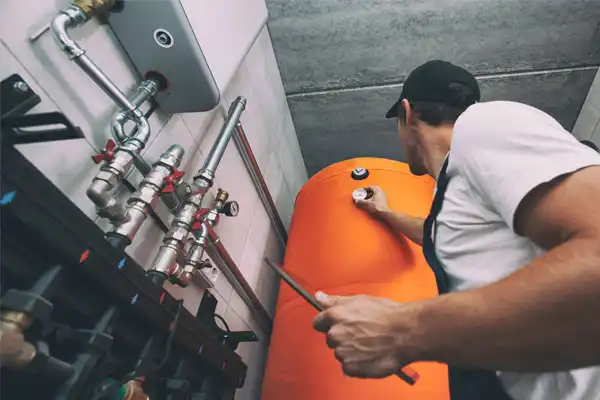
Here is the trade-off: maintenance costs money before there is a dramatic failure. That can feel optional. Emergency repair costs money after comfort has already disappeared, usually when scheduling is tighter and patience is thinner. Neither option is free. One is simply calmer.
When “just one more season” makes sense, and when it gets expensive
There is an old household phrase that has powered many questionable decisions: “Let’s just get one more season out of it.” Sometimes that is perfectly reasonable. If the furnace has a clear, repairable fault and the rest of the system is in serviceable condition, one more season may be a smart bridge.
Other times, one more season becomes a comedy with invoices. The warning sign is not merely age or inconvenience. It is pattern. Repeated failures, poor comfort, uncertain safety, improper installation, unavailable parts, and rising repair frequency all change the math. A furnace repair service visit should leave the customer with enough information to decide, not just enough fear to sign.
A reputable contractor can explain the repair option and the replacement option without turning the conversation into a hostage negotiation. The best recommendation is usually not the loudest one. It is the one that matches the actual condition of the equipment, the building’s needs, and the customer’s plans.
Safety is not an upsell
Heating equipment involves energy, heat, airflow, controls, and sometimes fuel gas. That is not a place for improvisation. Gas installation service should be handled by qualified professionals. Electrical work associated with heating and cooling equipment should be performed within the appropriate trade and regulatory boundaries. Refrigerant work on air conditioners and heat pumps belongs with technicians who meet the requirements for that equipment.
This may sound stern, but it is not meant to scare anyone. It is meant to separate homeowner awareness from homeowner surgery. You can observe symptoms. You can change accessible filters if the system is designed for it and you know how. You can keep vents clear. But opening equipment, adjusting gas components, bypassing safeties, or tampering with electrical systems is not thrift. It is a bad audition for a cautionary tale.
Professional service exists because these systems are useful, complex, and connected to comfort and safety. A furnace is not a toaster with ambition.
What good communication sounds like
A strong technician does not need to perform mystery. After diagnosis, you should hear what failed, what likely caused it, what repair is recommended, and what happens if nothing is done. If there are multiple options, they should be explained with practical differences. If the diagnosis is uncertain because a failure is intermittent, that uncertainty should be stated clearly.
Good communication also includes boundaries. If the furnace problem points to a broader electrical issue, the answer may involve an electrician. If a water issue is really plumbing leak repair, the answer may involve a plumber. If a drain line is blocked, drain cleaning or rooter service may be relevant. If a building has separate wastewater issues, septic system service is not the same as HVAC repair. Precision saves time and prevents the customer from paying the wrong expert to stare at the wrong problem.
The customer should not need to know the entire wiring diagram to feel informed. They should understand the decision in front of them.
A note on commercial and residential work
Heating and air conditioning contractors serve many types of buildings, including residential, commercial, industrial, institutional, and government facilities. The basics of heat transfer and airflow do not change just because the lobby has nicer chairs, but the scale and consequences do. A small home furnace problem may inconvenience one family. A heating failure in a commercial or institutional building can affect operations, occupancy comfort, and scheduling in a much bigger way.
That is why organized maintenance programs are common in larger facilities. Waiting for failure is rarely a sophisticated strategy. It is just procrastination wearing a hard hat. Still, the principle is the same in a house: systems benefit from attention before peak demand.
The quiet value of correct sizing
Correct equipment sizing deserves its own small spotlight because it is one of the least flashy and most important parts of heating and cooling work. Bigger equipment is not automatically better. Smaller equipment is not automatically more efficient in real use. The goal is fit.
A system must match the building’s needs. That involves more than guessing based on what was there before. Buildings change. Insulation changes. Windows change. Additions happen. Duct systems may be imperfect. Occupants may use rooms differently than the original design expected. A thoughtful heating contractor considers the system as installed and as used, not just as imagined on a sales form.
With air conditioners and heat pumps, correct refrigerant charging is also part of proper installation. Too often, homeowners think installation quality is invisible and therefore unimportant. It is invisible only when done correctly. When done poorly, it introduces itself over time through comfort complaints, energy waste, and equipment stress.
How to choose the right contractor without needing a trade license yourself
Picking a furnace repair service should not require becoming a part-time HVAC scholar. Still, a few signals help. Look for a contractor who treats heating, ventilation, and air conditioning as a specialized craft, not a side hustle squeezed between unrelated errands. Ask whether they service the type of equipment you have. Pay attention to how they discuss safety, diagnostics, and options.
A company that also provides plumbing, electrical coordination, air conditioning repair service, water heater repair, water heater installation, or heat pump installation may be useful, provided the right qualified people are doing the right work. Breadth is valuable only when paired with competence. Otherwise, it is just a long menu.
Here is a compact way to separate steady professionals from mechanical fortune tellers:
- They ask about symptoms before declaring a solution.
- They test before replacing parts.
- They explain safety issues without drama.
- They distinguish repairable faults from system-level problems.
- They tell you when another trade, such as an electrician or plumber, should be involved.
That last point is underrated. Confidence is good. Overconfidence is how drywall gets opened for no reason.
The seasonal rhythm of heating and cooling service
Heating equipment service and air conditioning maintenance follow the calendar whether anyone likes it or not. Heating problems cluster when cold weather makes systems work harder. Cooling problems cluster when heat arrives and air conditioners start earning their keep. Contractors know this rhythm well. Customers discover it anew every year, usually while standing near a thermostat in disbelief.
Scheduling maintenance before the rush is kinder to everyone. It gives residential rooter service the contractor more flexibility and gives the equipment a chance to prove itself before the weather becomes rude. An air conditioning tune-up before cooling season and heating maintenance before heating season are simple concepts, but simple does not mean useless. Brushing teeth is simple too, yet dentists remain busy.
For heat pumps, which may provide both heating and cooling, seasonal attention can be especially important because the equipment may run in more than one season. Heat pump installation and service should account for that dual role.
The odd little clues customers should mention
Small observations often speed diagnosis. A room that used to be comfortable but no longer is. A furnace that starts fine in mild weather but struggles during cold snaps. A blower that sounds different. A burner that tries to light and stops. A breaker that trips. A filter that gets dirty unusually fast. A recent remodel, new thermostat, water leak, drain backup, or electrical project.
Some of these clues may turn out unrelated. That is fine. A technician would rather sort through a few extra details than miss the one that matters. Buildings are full of coincidences, but they are also full of cause and effect pretending to be coincidence.
If a plumbing leak repair happened near mechanical equipment, say so. If drain cleaning was recently performed near a condensate line or mechanical room drain, mention it. If an electrician changed something in the panel, mention it. Nobody wins a prize for withholding context.
The furnace as part of a whole-house comfort system
A furnace repair service fixes immediate faults, but heating equipment service asks a bigger question: is the whole comfort system doing its job? That includes airflow, controls, ductwork, installation quality, maintenance history, and interaction with cooling equipment. It may also include related plumbing or electrical components where they connect to the HVAC system.
The house does not care which department name is on the truck. It cares whether heat arrives safely, evenly, and efficiently. The best contractors understand that. They do not treat a furnace as an isolated metal box. They treat it as one piece of a working building.
That perspective is useful even for simple repairs. Replacing a failed part may restore heat today, but noticing a blocked return, improper setup, or recurring control issue may prevent the next call. Good service repairs the problem in front of it and keeps an eye on the pattern behind it.
Warmth, minus the melodrama
Furnace repair service is at its best when it is calm, methodical, and honest. Heating equipment does not need mythology. It needs proper installation, careful maintenance, competent diagnostics, and repairs performed by people who respect the trades involved.
Whether the job calls for a heating contractor, air conditioning contractor, plumber, electrician, or another specialist, the goal is the same: a building that works without making its occupants think about mechanical systems all day. Comfort should feel ordinary. That is the compliment. When the furnace runs quietly, the thermostat behaves, the ducts deliver, and nobody is wearing a parka indoors, the system has achieved its highest calling.
And if the furnace does decide to stage a tiny rebellion on the coldest night of the year, at least you will know what good service should look like: less guessing, more testing, clear explanations, and no one pretending a safety switch is just being dramatic.
Name: Service Lion Plumbing Heating Air Electric
Address: 521 W Briardale Ave, Orange, CA 92865, United States
Phone: (657) 567-7305
Website: https://callservicelion.com/
Email: [email protected]
Hours:
Monday: Open 24 hours
Tuesday: Open 24 hours
Wednesday: Open 24 hours
Thursday: Open 24 hours
Friday: Open 24 hours
Saturday: Open 24 hours
Sunday: Open 24 hours
Open-location code: R48R+WV Orange, California, USA
Map/listing URL:
https://www.google.com/maps/search/?api=1&query=Google&query_place_id=ChIJQU4LBWHV3IARtnABtyykSA4
Google Map:
Socials:
https://www.facebook.com/ServiceLionCA/
https://www.youtube.com/channel/UCR_L35QzsRTxYZtX8PxJvPw
Local Service Information
Service Lion Plumbing Heating Air Electric provides plumbing, drain, heating, air conditioning, and electrical services from its Orange, California location.The company serves homeowners and properties throughout Orange and communities across Orange County and surrounding areas.
Available services include plumbing repairs, water heater work, drain and sewer services, heating and cooling service, electrical repairs, panels, lighting, outlets, and related home-system work.
Service is available for residential properties as well as light commercial needs described within the company's local service-area information.
The company's website emphasizes locally operated service, coordinated home-system support, and practical scheduling for plumbing, HVAC, and electrical needs.
The matching public business listing shows the Orange location as open 24 hours a day, seven days a week.
For service information or scheduling, call (657) 567-7305 or visit https://callservicelion.com/.
The public map listing identifies the business at 521 W Briardale Ave, Orange, CA 92865 and can be used for location and direction information.
Popular Questions About Service Lion Plumbing Heating Air Electric
What services does Service Lion Plumbing Heating Air Electric provide?
The company provides plumbing, drain and sewer, heating, air conditioning, and electrical services. Its published services include plumbing repair, water heaters, drain clearing, sewer work, HVAC repair and installation, electrical repairs, panels, circuit breakers, lighting, outlets, and related services.
Where is Service Lion Plumbing Heating Air Electric located?
The matching business location is 521 W Briardale Ave, Orange, CA 92865, United States.
What areas does Service Lion Plumbing Heating Air Electric serve?
The company serves Orange County and surrounding communities. Its published service-area information includes Orange, Anaheim, Brea, Yorba Linda, Fullerton, Huntington Beach, Newport Beach, Costa Mesa, Irvine, Lake Forest, and additional nearby cities.
Is Service Lion Plumbing Heating Air Electric open 24 hours?
The matching public business listing shows the location as open 24 hours on Monday through Sunday.
Does Service Lion Plumbing Heating Air Electric work on drains and sewer lines?
Yes. Published services include drain clearing, rooter service, camera inspection, hydro jetting, sewer line repair and installation, water line work, slab leak detection, and trenchless sewer line repair.
Does Service Lion Plumbing Heating Air Electric provide heating and air conditioning service?
Yes. Its published HVAC services include air conditioning repair and installation, heating service, furnace work, heat pumps, air ducts, indoor air quality assessments, and thermostat installation.
Does Service Lion Plumbing Heating Air Electric provide electrical service?
Yes. Published electrical services include repairs and installations, electrical panels, circuit breakers, safety inspections, lighting, outlets and switches, surge protection, generators, and EV charging equipment installation.
How can I contact Service Lion Plumbing Heating Air Electric?
Call (657) 567-7305.
Email: [email protected]
Website: https://callservicelion.com/
Facebook: https://www.facebook.com/ServiceLionCA/
Landmarks Near Orange, California
Old Towne Orange Historic District
A central historic district and useful geographic reference point for the Orange community.
Plaza Park
A well-known public gathering point in the center of Old Towne Orange.
Orange Public Library & History Center
A civic landmark serving residents near central Orange.
Hart Park
A major public park and recreation area south of central Orange.
Eisenhower Park
A public park serving neighborhoods in northern Orange.
Santiago Oaks Regional Park
A regional recreation and open-space landmark on the eastern side of Orange.
Irvine Regional Park
A large regional park and recognizable reference point east of the city.
Orange Park Acres
A distinctive residential community and service-area reference point in eastern Orange.
El Modena
An established Orange neighborhood that provides a practical local coverage reference.
Glassell Street
One of the city's principal north-south streets and a useful route through central Orange.
Lincoln Avenue
A major east-west roadway serving northern Orange and nearby communities.
State Route 55
A primary regional freeway connecting Orange with other parts of Orange County.