Heat Pump Installation and Refrigerant Charging Basics
Heat pump installation looks, at first glance, like a tidy swap: old box out, shiny new box in, homeowner nods approvingly, everyone goes home before the dog decides the tool bag is a chew toy. If only.
A heat pump is not just a piece of equipment. It is part of a heating and cooling system that has to be sized, installed, connected, charged, tested, and maintained with care. The outdoor unit matters. The indoor equipment matters. The refrigerant charge matters. The ductwork, electrical connection, thermostat setup, airflow, and service access all matter. A rushed installation can still blow warm or cool air for a while, which is why bad installs sometimes escape the scene of the crime wearing sunglasses. But sooner or later, the evidence shows up as high energy use, poor comfort, nuisance breakdowns, or a compressor that ages like milk.
A proper heat pump installation sits right in the wheelhouse of an experienced heating contractor or air conditioning contractor. It also crosses paths with other trades more often than people expect. Electrical work may require an electrician. Some jobs overlap with plumbing, especially where condensate drainage, water heating, or utility coordination comes into play. On broader mechanical projects, the same company may also handle furnace repair service, gas installation service, water heater installation, plumbing leak repair, drain cleaning, and other practical household headaches. Buildings do not care about trade labels. They care whether everything works together without drama.
Why heat pumps deserve careful installation
A heat pump moves heat rather than simply making it. In cooling mode, it behaves much like an air conditioner, moving heat from indoors to outdoors. In heating mode, it reverses the job and pulls heat from outside air to warm the building. That versatility is the charm. It is also why installation quality matters so much. A heat pump has to perform through different seasons, different loads, and different operating modes.
The U.S. Department of Energy describes HVAC contractors as specialized professionals whose work centers on installing and maintaining heating, ventilation, and air-conditioning equipment. That description may sound plain, but the work is anything but casual. A heat pump installation asks the contractor to make the equipment, airflow, refrigerant, controls, and building conditions cooperate. When they do, the system feels almost boring, in the best possible way. Rooms stay comfortable. Equipment cycles predictably. Utility bills do not arrive dressed as ransom notes.
ENERGY STAR has long emphasized that quality HVAC installation includes correct equipment sizing and correct refrigerant charging. Those two points deserve to be tattooed on every cardboard equipment box leaving a supply house. Oversize the system, and it may short cycle, struggle with humidity control, or wear itself out through constant starts and stops. Undersize it, and the poor machine spends its life sprinting uphill. Charge it incorrectly, and efficiency drops while the risk of failure rises. Heat pumps are forgiving in some ways, but they are not magical appliances blessed by woodland creatures.
Sizing comes before charging, and it is not guesswork
Refrigerant charging gets plenty of attention because gauges, hoses, scales, and digital tools look satisfyingly technical. But charging cannot rescue a badly selected system. If the equipment is wrong for the building, perfect refrigerant charge is like putting premium tires on a shopping cart. Admirable effort, limited outcome.
Correct equipment sizing is a quality installation requirement for heating and cooling systems. The goal is to match the heat pump to the building’s needs, not to the square footage alone and certainly not to the size of the old unit by habit. Buildings change. Insulation gets added. Windows get replaced. Rooms get finished. Ductwork gets altered by someone’s cousin with a heroic confidence and a flexible duct fetish. A responsible air conditioning contractor looks at the actual application rather than assuming the old system was right.
There is a temptation to oversize “just to be safe.” It feels comforting, like buying the larger ladder or ordering extra fries. In HVAC, that instinct can backfire. Equipment that is too large may satisfy the thermostat quickly without delivering steady comfort. Equipment that is too small may run excessively and fail to maintain temperature during demanding conditions. The right answer is not bigger or smaller. It is appropriate.
This is one reason heat pump installation should be treated as professional HVAC work, not a weekend experiment. Contractors who design, install, maintain, and service HVACR systems operate in a field where installation choices affect performance for years. The refrigerant charge is one part of that picture, and an important one, but it is not a substitute for proper selection.
The quiet importance of airflow
If refrigerant is the bloodstream of a heat pump, airflow is the breathing. Starve the system of air and the refrigerant circuit cannot do its job properly. Push air through dirty filters, blocked returns, crushed ducts, undersized grilles, or poorly matched indoor equipment, and the system will complain. Sometimes it complains politely, with uneven temperatures. Sometimes it throws a mechanical tantrum.
Air conditioning maintenance and an air conditioning tune-up often include checking the basic conditions that support proper airflow. Filters, coils, blower operation, and duct restrictions all affect performance. During installation, the contractor has to verify that the indoor side of the system can move enough air for the equipment. That does not mean every job requires duct replacement, but it does mean ductwork should not be ignored like an embarrassing relative at a wedding.
A good technician knows that refrigerant readings can mislead when airflow is wrong. The pressure and temperature readings may suggest one problem when the root cause lives elsewhere. Add refrigerant to compensate for an airflow problem and you have not fixed the system. You have merely taught it a new way to be wrong.
This is where experience shows. The seasoned air conditioning repair service technician does not stare at one gauge and declare victory. They consider the whole system. Is the indoor coil clean? Is the blower operating 24/7 plumber correctly? Are returns adequate? Is the outdoor coil clear? Is the thermostat calling properly? Is the system actually installed according to its intended configuration? The heat pump cannot answer in words, but it leaves clues everywhere.
Refrigerant charging basics, without the carnival tricks
Refrigerant charging is the process of placing the proper amount of refrigerant in the heat pump system so it can move heat efficiently and safely. Proper charging of an air conditioner or heat pump can reduce energy consumption and lower the risk of equipment failure. That is not a decorative detail. It is one of the core reasons a quality installation performs better than a slapdash one.
The basic idea sounds simple: the system needs the right amount of refrigerant. Too little, and the heat pump cannot transfer heat as designed. Too much, and pressures and temperatures can move outside the healthy operating range. Either condition can hurt efficiency and reliability. The catch is that “right amount” is not established by vibes, frost patterns, or the ancient method of “it feels cold enough at the vent.” That last one belongs in the same museum as using a shoe to diagnose a car engine.
Technicians use manufacturer information, operating conditions, and service measurements to confirm charge. The exact method depends on the equipment design and the conditions during service. What matters for the customer is not the brand of gauge in the technician’s hand. What matters is whether the contractor follows a disciplined process rather than guessing.
Refrigerant is also regulated. EPA definitions under Section 608 treat air conditioners and refrigeration equipment as appliances, and technicians involved in maintenance, service, repair, or installation can fall within that framework. That means refrigerant work is not casual tinkering. It belongs with trained people who understand both equipment performance and handling responsibilities.
Here is the short version of what a careful charging mindset looks like:
- Confirm the equipment is correctly matched and installed before treating refrigerant as the problem.
- Verify airflow and basic operating conditions so readings mean what they appear to mean.
- Follow the manufacturer’s charging guidance for the specific system and situation.
- Use measured data rather than “beer can cold” folklore.
- Check operation after adjustment, because a system is judged by how it runs, not by how confidently someone tightened a cap.
That is one list, and it has earned its keep. Refrigerant charging is not mystical, but it is also not guesswork. It is measurement, judgment, and restraint. Especially restraint. The best technicians know when not to add refrigerant.
Why “just top it off” is a dangerous phrase
Few words make a serious HVAC technician sigh harder than “Can you just top it off?” Refrigerant is not motor oil. A sealed system should not need routine topping off as part of normal air conditioning maintenance. If refrigerant is low, the question is why. There may be a leak, an installation issue, or some other service concern. Adding refrigerant without addressing the cause can create repeat service calls and steadily worsening performance.
Air conditioning repair often starts with a symptom: not cooling, not heating, ice on a line, long run times, or a breaker trip. Refrigerant charge may be involved, but it is one suspect in a crowded lineup. Electrical issues, airflow restrictions, dirty coils, control faults, and installation defects can all produce complaints that look similar from the living room sofa.
Heat pumps add another wrinkle because they operate in both heating and cooling modes. A complaint in winter may not present the same way as a complaint in summer. That is why a contractor needs to understand heat pump operation, not merely air conditioning repair in the narrow sense. A heat pump is an air conditioner with ambitions and a reversing act.
The trade-off for homeowners is time versus certainty. A quick refrigerant addition may appear cheaper on the invoice that day. A proper diagnosis may take longer, but it can prevent a cycle of repeat visits. Nobody enjoys paying for diagnostic time, but nobody enjoys buying refrigerant over and over either. The second option is like putting air in a tire every morning and calling yourself a transportation strategist.
Installation is a team sport, even when one company handles it
OSHA classifies plumbing, heating, and air-conditioning work as special trade contracting, while electrical work is separately classified. That distinction shows up in the field. A heat pump installation may require HVAC skills, electrical coordination, and sometimes plumbing-related work for condensate or auxiliary systems. On projects involving fuel-burning backup equipment, gas installation service or furnace repair service knowledge may also matter. The point is not that every job needs every trade. The point is that good contractors know where one scope ends and another begins.
An electrician may be needed for dedicated circuits, disconnects, panel capacity, or lighting contractor work if the installation affects access and safety around mechanical spaces. A plumber may be involved when nearby plumbing conflicts with equipment placement, when condensate routing needs attention, or when other household work is being bundled, such as water heater repair, water heater installation, plumbing repiping, or water softener installation. In older properties, surprises love to hide behind panels and above ceilings. The building always gets a vote.
HVAC contractors may also provide maintenance, repairs, duct cleaning, and plumbing or electrical work associated with heating and cooling equipment. That practical overlap is why many service companies cover several related categories. One customer calls for heat pump installation, then remembers the slow floor drain, the aging water heater, and the flickering utility-room light. Suddenly the appointment calendar looks like a small municipal project.
Still, competence matters more than the number of services printed on the van. Whether the company advertises as an air conditioning contractor, heating contractor, plumber, electrician, or all of the above, the technician standing in front of the equipment needs the right training for the task. A heat pump does not care how nice the logo is.
The installation day nobody brags about, because it went right
The best installations are often uneventful. That does not make for thrilling dinner conversation, but it makes for comfortable rooms. A clean installation day has rhythm. Equipment arrives. The old system is removed carefully. The new equipment is placed with proper service access. Connections are made. Electrical and control wiring are handled correctly. The refrigerant side is prepared and charged according to the system requirements. Operation is tested. The workspace is cleaned. The homeowner is shown the basics without being buried in jargon.
That last part matters. A homeowner does not need a lecture on every internal component. They do need to know how to operate the thermostat, when to replace or clean filters, what normal operation sounds like, and when to call for service. A little education prevents a lot of panic. Heat pumps may run differently from older furnaces or basic air conditioners. They may deliver heat in a steadier way. They may run longer cycles. Without a simple explanation, normal behavior can look suspicious.
An installer with field sense also pays attention to service access. Future air conditioning maintenance should not require the flexibility of a circus performer. Outdoor units need room around them. Indoor components need panels that can open. Filters should be accessible. Condensate drainage should be visible enough to inspect. I have seen mechanical closets where changing a filter required moving a water heater, a shelving unit, and what appeared to be every holiday decoration since 1998. That is not installation. That is a puzzle box.
Commissioning: the part between “it turns on” and “it is right”
There is a big difference between starting equipment and commissioning it. Starting means the heat pump runs. Commissioning means the contractor verifies that it runs as intended. That includes checking controls, operating modes, airflow conditions, refrigerant charge, drainage, and general performance. It is the difference between hearing an engine start and knowing the brakes work.
Proper HVAC installation includes correct equipment sizing and refrigerant charging, but the proof comes during startup and testing. The technician needs enough operating time to see what the system does. A rushed startup can miss issues that reveal themselves only after pressures stabilize, controls cycle, or condensate begins to form. Patience is not glamorous, but neither is returning two days later because the system quit during dinner.
Customers sometimes see a technician standing near equipment, watching instruments, and wonder if nothing is happening. Plenty is happening. A good technician is comparing expected behavior with actual behavior. Is the system responding correctly to the thermostat? Is the outdoor unit operating smoothly? Is the indoor unit moving air properly? Does the system switch modes appropriately? Are there signs of abnormal pressure, temperature, noise, or vibration? The quiet minutes are where many mistakes get caught.
Commissioning also helps separate installation issues from equipment defects. New equipment can have problems, but many early failures trace back to installation conditions. Poor charging, weak airflow, improper electrical setup, or careless assembly can make good equipment look bad. Blaming the machine is easy. Proving the installation is right is better.
Maintenance keeps the installation honest
Even a well-installed heat pump needs maintenance. Air conditioning maintenance and heat pump maintenance preserve the conditions that allowed the system to perform properly on day one. Filters load with dust. Outdoor coils collect debris. Electrical connections age. Drains can clog. Controls can drift or fail. No machine gets cleaner and more tuned by being ignored, except perhaps a cast-iron skillet, and even that has limits.
An air conditioning tune-up is not magic dust sprinkled over the cabinet. It is a chance to inspect, clean, test, and catch small problems before they become expensive ones. For heat pumps, seasonal attention can be especially useful because the equipment may work in both cooling and heating seasons. A system that runs much of the year deserves more than a sympathetic glance every decade.
Maintenance is also where related household services sometimes enter the story. Condensate drainage can resemble plumbing trouble when water appears where it should not. A clogged drain line may lead a homeowner to ask about drain cleaning, rooter service, or even hydrojetting if larger drainage problems are already present elsewhere on the property. That does not mean every HVAC drain issue needs heavy plumbing equipment. It means a contractor with both HVAC and plumbing awareness can sort out whether the problem belongs to the heat pump, the drain system, or the mysterious swamp behind the washing machine.
Likewise, a home with heating and cooling work underway may reveal other mechanical needs. Water heater repair, water heater installation, plumbing repiping, water softener installation, and plumbing leak repair are separate services, but they often live in the same mechanical rooms and service conversations. Good contractors do not turn every visit into a sales parade. They simply notice real issues and explain priorities clearly.
When repair makes more sense than replacement, and when it does not
Not every struggling system needs replacement. Air conditioning repair can solve many problems when the equipment is otherwise sound and the issue is isolated. A failed component, poor maintenance condition, control problem, or correctable installation defect may not justify a full heat pump installation. Repair deserves consideration when it restores reliable operation at a reasonable cost.
Replacement begins to make more sense when the existing system no longer fits the building, suffers repeated failures, or cannot deliver comfort efficiently. The decision is rarely just mechanical. Budget, comfort expectations, length of ownership, utility costs, and the condition of related equipment all matter. A reputable contractor explains the trade-offs rather than treating replacement as the answer to every sneeze.
Here is a practical comparison homeowners can use when weighing repair against installation:
| Situation | Repair may fit | Replacement may fit | |---|---|---| | Single, clear fault | Yes, if the system is otherwise reliable | Maybe, if other major issues exist | | Poor comfort throughout the home | Maybe, if caused by maintenance or airflow problems | Yes, if sizing or system design is wrong | | Repeated refrigerant concerns | Only after proper leak diagnosis | Often worth discussing if reliability is declining | | High energy use | Maybe, if charge or maintenance is the issue | Yes, if equipment and installation are outdated or mismatched | | Major home renovation | Sometimes | Often, because loads and layout may change |
That is the second and final list-like structure, and it earns its keep too. The key is context. A repair-first approach can be wise. So can replacement. The bad choice is deciding before diagnosing.
Refrigerant charge and energy use
Proper refrigerant charging can reduce energy consumption. That point is easy to say and easy to underestimate. A heat pump with the wrong charge may still operate, but operating is not the same as operating well. It may run longer, transfer heat less effectively, or place more stress on components. The homeowner experiences this as weaker comfort, higher utility bills, or shortened equipment life.
The difficult part is that refrigerant charge problems are not always obvious from the thermostat. A mildly incorrect charge may not cause a dramatic failure right away. It may nibble at performance over time. That is why quality installation and maintenance are so important. A system should not be judged only by whether the house eventually reaches the setpoint. If it takes too long, works too hard, or struggles under normal conditions, something deserves attention.
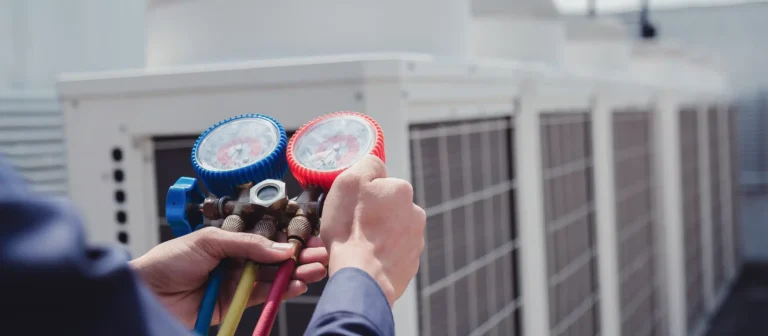
Charging accuracy also depends on installation discipline. Refrigerant line connections, system preparation, manufacturer procedures, and operating conditions all affect the final result. A technician who rushes through these steps can leave behind a problem that looks like a future repair issue. The homeowner may not connect the dots months later when comfort slips or a component fails. The installation invoice is long filed away, possibly under a stack of takeout menus and appliance manuals nobody has opened.
The customer’s role: not technical, but important
Homeowners do not need to become refrigerant experts. Please do not buy gauges online and start impersonating an HVAC technician in the backyard. That way lies confusion, regulatory trouble, and at least one neighbor peering through blinds.
The customer’s role is to hire carefully, ask practical questions, and pay attention to system behavior. Before heat pump installation, ask how the contractor determines equipment size. Ask whether refrigerant charging and startup testing are included as part of the installation process. Ask who handles electrical requirements. Ask what maintenance the system will need. These are not rude questions. They are adult questions, and they tend to separate serious contractors from people who rely on lucky guesses and fresh caulk.
After installation, use the system as instructed. Replace or clean filters on schedule. Keep outdoor equipment reasonably clear. Call for service when performance changes. A heat pump should not be treated like a toaster that happens to live outside. It is a mechanical system with moving parts, electrical components, refrigerant, airflow requirements, and drainage needs.
If something seems wrong, describe the symptom clearly. “It is not keeping up in the afternoon” helps. “It sounds louder than it did last week” helps. “My brother says it needs Freon” helps less, especially if your brother also thinks drain cleaning is best performed with a garden hose and optimism. The more precise the symptom, the better the diagnostic path.
What separates a solid contractor from a parts changer
The HVAC trade includes installation, maintenance, repairs, duct cleaning, and related plumbing or electrical work around heating and cooling equipment. That range means customers often see different skill levels. Some technicians are excellent diagnosticians. Some are strong installers. Some are still learning. A good company supports training, procedures, and accountability so the final job does not depend on luck.
A solid contractor treats heat pump installation as a system project. They consider sizing, airflow, refrigerant charge, controls, electrical requirements, service access, and homeowner education. They do not treat refrigerant as seasoning. They do not replace equipment without discussing why. They do not promise that one shiny box will fix duct problems, insulation problems, or a thermostat mounted in a terrible location.
The best technicians also know when to bring in another trade. If electrical work belongs with an electrician, they say so. If a plumbing issue sits outside HVAC scope, they call for plumbing help. If sewer or septic trouble appears, septic system service is not magically solved by an air conditioning tool bag. Professional judgment includes boundaries.
That humility matters. Buildings are full of interconnected systems. Heating, cooling, plumbing, electrical, drainage, and ventilation often share cramped spaces and consequences. A careless change in one area can annoy another. Anyone who has worked in mechanical rooms has learned that pipes, wires, ducts, and drains all seem to want the same twelve inches of wall space. The universe has a sense of humor, and it apparently enjoys elbows.
A few field realities worth knowing
Heat pump installation is rarely identical from one home to the next. A simple replacement in an accessible location may proceed smoothly. A tight attic, old duct system, questionable electrical capacity, or awkward condensate route can complicate the job. Older homes can hide surprises. Newer homes can too, because age does not have a monopoly on strange decisions.
Weather also affects service work. Heat pumps operate across seasons, but technicians need appropriate conditions to test certain aspects of performance. If outdoor conditions do not allow one charging method or operating check, the contractor may need to follow the suitable procedure for that situation. That is not evasiveness. It is how technical work behaves when the real world refuses to hold still.
Communication helps. If the contractor explains that some readings depend on operating conditions, that is a good sign. If they claim every system can be charged perfectly in every condition with one glance at a gauge, keep your wallet close and your eyebrows raised.
Another field reality: neatness often reflects care, but it is not the whole story. A beautiful installation can still be incorrectly charged. An ugly installation can sometimes operate decently, though it may be a future service nightmare. The goal is both: clean workmanship and verified performance. Pretty and correct should not be enemies.
The basics that matter most
Heat pump installation succeeds when the equipment fits the building, the airflow supports the equipment, the refrigerant charge is correct, and the controls and electrical setup allow the system to operate as designed. It also succeeds when the homeowner understands basic operation and maintenance. None of this requires theatrical mystery. It requires trade knowledge, patience, and measurement.
Refrigerant charging is central because proper charge affects energy consumption and failure risk. It should be performed by qualified technicians who understand heat pumps, follow manufacturer guidance, and respect refrigerant handling requirements. It should never be reduced to “add some and see what happens.” That phrase has caused enough trouble to deserve its own tiny jail.
A good heat pump installation may not be the cheapest line on a proposal, but cheap work can become expensive with impressive speed. Poor sizing, sloppy startup, neglected airflow, and careless charging can turn efficient equipment into an ongoing complaint factory. Quality work, by contrast, tends to disappear into daily comfort. The system runs. The rooms feel right. The utility bill behaves. Nobody thinks about the heat pump during dinner.
That is the real compliment. Not applause. Not a dramatic reveal. Just a home that heats and cools properly because the contractor did the boring, technical, essential things right.
Name: Service Lion Plumbing Heating Air Electric
Address: 521 W Briardale Ave, Orange, CA 92865, United States
Phone: (657) 567-7305
Website: https://callservicelion.com/
Email: [email protected]
Hours:
Monday: Open 24 hours
Tuesday: Open 24 hours
Wednesday: Open 24 hours
Thursday: Open 24 hours
Friday: Open 24 hours
Saturday: Open 24 hours
Sunday: Open 24 hours
Open-location code: R48R+WV Orange, California, USA
Map/listing URL:
https://www.google.com/maps/search/?api=1&query=Google&query_place_id=ChIJQU4LBWHV3IARtnABtyykSA4
Google Map:
Socials:
https://www.facebook.com/ServiceLionCA/
https://www.youtube.com/channel/UCR_L35QzsRTxYZtX8PxJvPw
Local Service Information
Service Lion Plumbing Heating Air Electric provides plumbing, drain, heating, air conditioning, and electrical services from its Orange, California location.The company serves homeowners and properties throughout Orange and communities across Orange County and surrounding areas.
Available services include plumbing repairs, water heater work, drain and sewer services, heating and cooling service, electrical repairs, panels, lighting, outlets, and related home-system work.
Service is available for residential properties as well as light commercial needs described within the company's local service-area information.
The company's website emphasizes locally operated service, coordinated home-system support, and practical scheduling for plumbing, HVAC, and electrical needs.
The matching public business listing shows the Orange location as open 24 hours a day, seven days a week.
For service information or scheduling, call (657) 567-7305 or visit https://callservicelion.com/.
The public map listing identifies the business at 521 W Briardale Ave, Orange, CA 92865 and can be used for location and direction information.
Popular Questions About Service Lion Plumbing Heating Air Electric
What services does Service Lion Plumbing Heating Air Electric provide?
The company provides plumbing, drain and sewer, heating, air conditioning, and electrical services. Its published services include plumbing repair, water heaters, drain clearing, sewer work, HVAC repair and installation, electrical repairs, panels, circuit breakers, lighting, outlets, and related services.
Where is Service Lion Plumbing Heating Air Electric located?
The matching business location is 521 W Briardale Ave, Orange, CA 92865, United States.
What areas does Service Lion Plumbing Heating Air Electric serve?
The company serves Orange County and surrounding communities. Its published service-area information includes Orange, Anaheim, Brea, Yorba Linda, Fullerton, Huntington Beach, Newport Beach, Costa Mesa, Irvine, Lake Forest, and additional nearby cities.
Is Service Lion Plumbing Heating Air Electric open 24 hours?
The matching public business listing shows the location as open 24 hours on Monday through Sunday.
Does Service Lion Plumbing Heating Air Electric work on drains and sewer lines?
Yes. Published services include drain clearing, rooter service, camera inspection, hydro jetting, sewer line repair and installation, water line work, slab leak detection, and trenchless sewer line repair.
Does Service Lion Plumbing Heating Air Electric provide heating and air conditioning service?
Yes. Its published HVAC services include air conditioning repair and installation, heating service, furnace work, heat pumps, air ducts, indoor air quality assessments, and thermostat installation.
Does Service Lion Plumbing Heating Air Electric provide electrical service?
Yes. Published electrical services include repairs and installations, electrical panels, circuit breakers, safety inspections, lighting, outlets and switches, surge protection, generators, and EV charging equipment installation.
How can I contact Service Lion Plumbing Heating Air Electric?
Call (657) 567-7305.
Email: [email protected]
Website: https://callservicelion.com/
Facebook: https://www.facebook.com/ServiceLionCA/
Landmarks Near Orange, California
Old Towne Orange Historic District
A central historic district and useful geographic reference point for the Orange community.
Plaza Park
A well-known public gathering point in the center of Old Towne Orange.
Orange Public Library & History Center
A civic landmark serving residents near central Orange.
Hart Park
A major public park and recreation area south of central Orange.
Eisenhower Park
A public park serving neighborhoods in northern Orange.
Santiago Oaks Regional Park
A regional recreation and open-space landmark on the eastern side of Orange.
Irvine Regional Park
A large regional park and recognizable reference point east of the city.
Orange Park Acres
A distinctive residential community and service-area reference point in eastern Orange.
El Modena
An established Orange neighborhood that provides a practical local coverage reference.
Glassell Street
One of the city's principal north-south streets and a useful route through central Orange.
Lincoln Avenue
A major east-west roadway serving northern Orange and nearby communities.
State Route 55
A primary regional freeway connecting Orange with other parts of Orange County.