Plumbing Leak Repair for Hidden Pipe Problems
A hidden pipe leak is a sneaky little gremlin. It does not kick the door in. It does not announce itself with a brass band and a puddle shaped like Nebraska. It usually starts with something boring: a damp cabinet floor, a water heater closet that smells faintly musty, a stain that appears on the ceiling and then has the nerve to grow while you are trying to enjoy dinner.
That is the trouble with hidden pipe problems. The pipe may be tucked behind drywall, under a slab, inside a ceiling cavity, or behind the mechanical equipment that already makes the room look like a small submarine. By the time the leak becomes obvious, the repair is rarely just “tighten the thingy.” Sometimes it is still simple, thank goodness. Sometimes it is plumbing leak repair plus access work, drain cleaning, water heater repair, or a serious conversation about plumbing repiping. The trick is knowing which situation you are in before a modest leak starts auditioning for the role of indoor water feature.
Plumbing, heating, and air-conditioning work often live close together in real buildings. That is not just a contractor’s sales brochure talking. The trades overlap in mechanical rooms, utility closets, basements, crawl spaces, and attic spaces where pipes, drains, air conditioning lines, furnace equipment, water heaters, and electrical connections all compete for elbow room. A good Plumber knows when the job is purely plumbing and when it bumps into the territory of an Air conditioning contractor, Electrician, Heating contractor, Furnace repair service, or Gas installation service. The house does not care which trade label we use. Water goes where gravity, pressure, and bad luck tell it to go.
The leak you can’t see is still keeping busy
A visible leak has manners. It drips into a pan, pools below a valve, or sprays theatrically from a fitting so everyone knows whom to blame. A hidden leak behaves more like a raccoon in the attic. You hear something, smell something, notice damage, and then spend the next hour wondering if you imagined it.
The first clue professional air conditioning repair is often moisture in the wrong place. A baseboard swells. Paint bubbles. Flooring cups at the edges. A cabinet bottom softens near the back wall. A ceiling stain appears below a bathroom, laundry area, kitchen, or mechanical room. Sometimes the sign is not visible at all. A customer may notice that a water heater seems to run more than usual, or that the sound of water continues after fixtures are turned off. Those are the moments when a service call becomes detective work.
Hidden leaks are especially irritating because water travels. A stain on a downstairs ceiling does not always sit directly beneath the failing pipe. Water can run along framing, ducts, pipe insulation, or the underside of flooring before dropping somewhere dramatic. That is why opening the ceiling exactly under the stain can sometimes feel like digging for buried treasure using a spoon and a horoscope.
Experienced technicians do not start by demolishing half the building. They narrow the field. Is the leak connected to a pressurized supply pipe, where water leaks whether fixtures are in use? Is it tied to a drain line, where the trouble shows up after someone uses a sink, shower, tub, dishwasher, washing machine, or condensate drain? Is it around a water heater, heat pump installation, air handler, or air conditioning system where plumbing and HVAC components share space? The answer changes everything.
Plumbing leak repair is part science, part patience, part not stepping through the ceiling
The unglamorous truth is that good plumbing leak repair depends on sequence. Rushing straight to the pipe is tempting, especially when the homeowner is staring at the ceiling stain like it personally betrayed them. But guessing creates extra holes, extra mess, and extra repair bills.
A careful technician asks when the leak appears, what fixtures were used, whether heating or cooling equipment has been running, and whether any recent work was done. That last question matters more than people think. Water heater installation, water softener installation, air conditioning maintenance, an air conditioning tune-up, drain cleaning, or fixture replacement can all disturb nearby piping or reveal existing weaknesses. It does not mean someone did poor work. Buildings are full of old joints, tired valves, and materials that have been patiently waiting for the next vibration, temperature change, or pressure event to make their complaint official.
Then comes inspection. A plumber may check exposed piping first, because the easiest answer deserves a chance to win. Shutoff valves, supply lines, trap connections, water heater fittings, and visible drain joints often tell the story. If they do not, the investigation moves outward. The job becomes a matter of testing, isolating, and observing.
Here is where homeowners sometimes get impatient. That is understandable. Nobody wants to pay someone to “look around.” But a hidden pipe leak is not a carnival game where you throw a wrench and hope it lands on the problem. The looking around is the work. It prevents the wrong wall from being opened, the wrong fixture from being blamed, and the wrong repair from being made while the real leak keeps throwing a party behind the plaster.
Supply leak or drain leak, the great household whodunit
Most hidden pipe problems fall into a few broad categories. Pressurized supply leaks tend to leak continuously because the pipe is under pressure even when no one is using water. Drain leaks usually appear only when a fixture is draining. That difference can save hours of confusion.
A supply leak may show up as constant dampness, repeated ceiling staining, or water accumulating even when the bathroom, kitchen, or laundry area has not been used. A drain leak often needs a trigger. Run the shower for ten minutes, and the ceiling stain darkens. Empty a sink, and the cabinet below gets wet. Use the washing machine, and the trouble appears near a wall cavity or floor.
There are edge cases, because plumbing enjoys comedy. A shower leak may not be the drain pipe at all. It may be water escaping around the trim, door, tub edge, or wall surface before finding its way into the structure. A toilet leak may come from the water supply, the tank, the bowl connection, or the drain seal area. A kitchen leak may seem like a pipe problem until someone notices the dishwasher discharge, disposal connection, or sink rim. Good plumbers do not assume the most expensive answer first. They test.
Drain problems can also imitate leaks. A slow or partially blocked drain can back water into joints, pans, or areas that normally stay dry. In those cases, drain cleaning, Rooter service, or Hydrojetting may become part of solving what initially looked like a pipe failure. The repair depends on whether the problem is a damaged pipe, an obstruction, poor drainage, or a combination of little nuisances working as a team.
Mechanical rooms, where plumbing and HVAC share a tiny apartment
Many hidden leaks are discovered near the equipment nobody wants to think about until it stops working. Water heaters, furnaces, air handlers, heat pumps, air conditioning equipment, softeners, drains, gas piping, electrical connections, and sometimes septic system service components or sewer hookups can all appear in the same general zone of the home or building. It is a crowded neighborhood.
This matters because a leak near mechanical equipment is not automatically a failed plumbing pipe. It could be a water heater issue, a drain issue, a condensate problem related to cooling equipment, or a connection associated with installation or maintenance. The U.S. Department of Energy describes HVAC contractors as specialists who install and maintain heating, ventilation, and air-conditioning equipment, and their work can include maintenance, repairs, duct cleaning, and plumbing or electrical work associated with heating and cooling systems. In the real world, that overlap means the right contractor knows where one system ends and another begins.
An Air conditioning repair service may be needed if moisture appears around cooling equipment. An air conditioner or heat pump depends on proper installation details, including correct sizing and refrigerant charging, and maintenance or repair can involve trained technicians. That does not make every puddle an air conditioning repair issue, but it does mean a leak investigation should respect the whole system. A condensate drain problem can look suspiciously like a plumbing leak, especially in warm months when cooling equipment runs often.
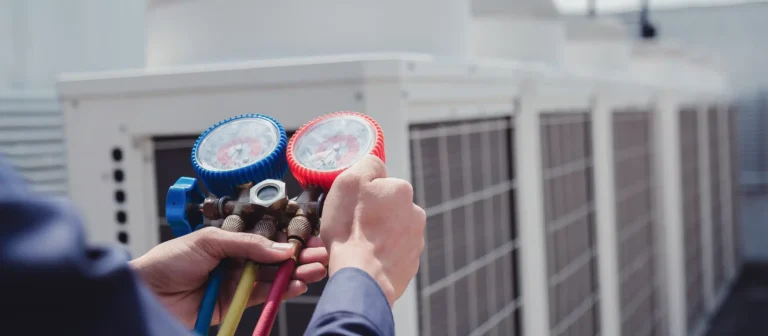
A furnace area can be just as tricky. A Furnace repair service or Heating contractor may need to evaluate equipment if the leak appears tied to heating operation or nearby mechanical components. A Gas installation service may be involved where gas-fired equipment is present, though gas work is not something to poke at casually. If the repair touches wiring, controls, or lighting around the workspace, an Electrician or Lighting contractor may be the right professional. The best service companies do not pretend one license magically covers the entire universe. They coordinate the trades and keep the homeowner from playing contractor bingo.
What a careful leak visit should feel like
A plumbing leak repair appointment should not feel like a magic show where someone disappears into a crawl space and reappears holding a frightening invoice. You should understand the likely source, the tests being performed, the access needed, and the repair options before serious cutting begins. There are emergencies where speed matters, of course, but even then, clear communication is part of the job.
A sensible leak diagnosis often moves through a short, disciplined process:
- Identify when the moisture appears and which fixtures or systems were used.
- Inspect exposed plumbing, water heater connections, drains, and nearby mechanical equipment.
- Isolate supply and drain possibilities through controlled testing.
- Open access only where evidence points, not where panic points.
- Repair the failed component, then test again before closing anything up.
That is one list, and it earns its keep. The point is not to turn homeowners into plumbers. The point is to show that leak repair has a logic. When that logic is missing, costs wander around like a shopping cart with one bad wheel.
Why hidden leaks often reveal bigger plumbing decisions
Sometimes the repair is delightfully small. A failed supply line gets replaced. A loose drain joint gets corrected. A water heater fitting is repaired. Everyone goes home, and the ceiling dries with appropriate grumbling.
Other times, the leak exposes a broader issue. One failing section of pipe may be part of a larger pattern. Repeated leaks in different areas may suggest that patching is becoming a hobby, and not a cheap one. That is when plumbing repiping enters the conversation.
Repiping is not a casual upsell when presented honestly. It is a trade-off. Repairing one leak costs less today and may be exactly right if the rest of the system is sound. Repiping costs more, involves planning and access, and may require coordination around walls, fixtures, water heaters, softeners, and mechanical spaces. But if a building has recurring hidden pipe failures, repeated ceiling repairs, and shutoffs that no longer inspire confidence, replacing larger sections of piping can reduce the parade of emergencies.
The honest answer depends on age, material, location, accessibility, leak history, and the building owner’s tolerance for future disruption. A rental property, medical office, restaurant, or family home with one bathroom may make different choices because downtime has different consequences. A skilled Plumber explains the options without treating the customer like they just wandered into a financial ambush.
Water heaters are frequent suspects, and occasionally guilty
Water heaters deserve their own paragraph because they are often found near mystery moisture. They have piping connections, valves, drains, pans, and sometimes nearby equipment. When water appears around the base, the first instinct is to blame the tank. Sometimes that is correct. Sometimes the water is coming from a connection above, a relief line, nearby piping, or another system draining into the same area.
Water heater repair and water heater installation both require attention to details beyond the tank itself. The piping, valves, and drainage arrangement matter. If a leak appears after a new installation, it may be a connection that needs adjustment, or it may be an unrelated old valve that picked that week to resign dramatically. If the water heater is older or has repeated issues, replacement may be more practical than repair. If it is relatively new and the leak is from an accessible connection, repair may be the sensible choice.
The water softener area can create similar confusion. Water softener installation adds piping, bypass valves, and drain connections. A small leak around that setup can hide behind the unit or run along the floor until it appears somewhere else. Again, diagnosis beats guessing. Guessing is just plumbing with jazz hands.
Drains, roots, and the fine art of not blaming the wrong pipe
Not every hidden water problem starts with supply piping. Drain lines can fail, separate, clog, or overflow under the right unpleasant conditions. In buildings with older drainage systems or heavy use, a blockage can turn a normal fixture into a leak source. If waste or drain water cannot move properly, it finds weak points, low points, and any place nobody wanted it to visit.
Drain cleaning can solve problems caused by buildup or obstruction. Rooter service is often associated with clearing drain or sewer lines. Hydrojetting may be used where appropriate to scour certain lines with high-pressure water, though it is not a magic wand and should be matched to the condition and type of piping. If a line is damaged, poorly sloped, or compromised, cleaning may restore flow temporarily without fixing the underlying defect.
This is where camera inspection is often discussed in the trade, though whether it is needed depends on the situation. The practical principle is simple: if the leak is connected to drain use and keeps returning after basic cleaning, the pipe itself may need closer evaluation. A recurring drain issue should not be treated forever as a clog if the real problem is structural. That is like buying new shoelaces because your car has a flat tire.
When HVAC service enters the leak conversation
Heating and cooling equipment can complicate leak investigations because those systems can involve moisture, drains, piping connections, electrical components, and tight mechanical spaces. An Air conditioning contractor may install and maintain equipment, and an Air conditioning repair service may handle repair and maintenance. Air conditioning maintenance and an air conditioning tune-up can include checking components that affect reliability and performance, while proper installation of air conditioners and heat pumps depends on details such as correct equipment sizing and proper refrigerant charging.
Why mention that in an article about plumbing leak repair? Because homeowners often call the first trade name that comes to mind. If there is water near the furnace, they call a heating company. If there is water under the air handler, they call for air conditioning repair. If there is water under the sink, they call a plumber. In clean textbook situations, that works. In mechanical closets, crawl spaces, and mixed-use equipment areas, the first contractor may need to identify that another trade should be involved.
A Heat pump installation, for example, can share space with plumbing drains or water heater piping. A cooling system may rely on condensate drainage. A furnace or heating setup may sit beside plumbing lines and gas piping. Electrical and lighting access may affect safe repair work. The smartest contractors are not territorial. They are practical. They know whether the leak belongs to plumbing, HVAC, electrical safety, or a combination.
Access is not damage, but it still feels personal
Hidden leaks sometimes require opening walls, ceilings, cabinets, or floors. No one loves this part. Even seasoned technicians wince a little before cutting into a nicely painted ceiling. But access is often the difference between a real repair and an expensive shrug.
The goal is controlled access. Make the smallest practical opening in the most useful location. Avoid blind destruction. Protect the area. Confirm the source. Repair the pipe or connection. Test thoroughly. Then the building can be dried and restored. That sounds tidy in writing. In a cramped vanity with a corroded fitting and a homeowner’s shampoo collection raining down like tiny plastic grenades, it is less poetic.
One thing worth saying plainly: plumbing contractors often repair plumbing, not drywall, flooring, cabinetry, or paint. Some companies coordinate restoration, and some do not. It is wise to ask before the work begins. A homeowner who understands where the plumber’s scope ends is less likely to be surprised when the pipe is fixed but the ceiling still looks like it lost a bar fight.
The price of waiting, also known as the damp tax
A small hidden leak can become expensive because water is patient. It does not need much volume to cause trouble. A slow drip in the wrong cavity can affect drywall, insulation, framing surfaces, flooring, cabinets, and finishes. It can also make future diagnosis harder because wet materials spread the evidence around. By the time everything is damp, the original source may be less obvious.
Waiting also narrows your options. Early on, a technician may be able to repair a fitting or pipe section with modest access. Later, the job may involve more removal, drying, restoration, and possibly replacement of components that were not originally part of the problem. That is the damp tax. It is unpopular, poorly advertised, and collected without mercy.
There are times when shutting off water to the affected area is the right immediate move. If there is an accessible fixture shutoff, use it. If the leak is significant and cannot be isolated, the main water shutoff may be necessary until a Plumber arrives. For water near electrical equipment, switches, panels, or lighting, caution matters. That may be Electrician territory, and no repair bill is improved by adding a shock hazard.
What homeowners can check before calling, without turning the house into a science fair
There are a few safe observations that help a technician arrive prepared. You do not need to dismantle anything or conduct a midnight pressure experiment with a flashlight in your teeth. Just gather clues.
Check whether the leak appears only after using a specific fixture. Look at nearby cabinets, ceilings, and floors. Notice whether the moisture is constant or intermittent. Listen for water movement when fixtures are off. If equipment is nearby, note whether heating or cooling has been running. If you had recent work performed, mention it without embarrassment. Good technicians want facts, not courtroom drama.
A short pre-call checklist can help:
- Where did you first notice water, staining, odor, or damage?
- What fixture or equipment was used in the hour before it appeared?
- Does the area stay wet all the time or dry between uses?
- Are there water heaters, softeners, air conditioning units, furnaces, or drains nearby?
- Can you safely shut off water to the affected fixture or area?
That is the second and final list. We have used our list allowance responsibly, like adults with clipboards.
Repair, replace, or repipe: the grown-up decision
The right repair strategy depends on what failed and why. A single bad connection does not justify replacing half the plumbing system. A pattern of hidden leaks should not be ignored because the latest patch held for one afternoon. Good service work includes judgment, not just tools.
A targeted repair makes sense when the failed section is isolated, the surrounding piping is in serviceable condition, and access is reasonable. Replacement of a fixture connection, valve, drain section, or water heater component may solve the issue cleanly. Broader replacement makes sense when repeated failures suggest the system is aging out or when access is already open and replacing more piping now prevents predictable future problems.
Plumbing repiping is a bigger project, but not always a dramatic one. In some buildings it can be phased. In others, it is best handled in one planned effort to reduce repeated disruption. The best time to discuss it is not when water is actively dripping into a bucket at 11 p.m., though that is often when the subject barges in wearing muddy boots. If you have had multiple leak repairs, ask for a candid assessment. You may not need repiping. Or you may be buying temporary peace in small, annoying installments.
Commercial spaces have less tolerance for mystery water
Hidden leaks in commercial or institutional spaces carry different pressure. A leak above a retail floor, office, kitchen, mechanical room, or equipment area can interrupt operations. Plumbing, heating, air-conditioning, and electrical systems may be closer together and more complex. Contractors who service those spaces need to recognize the coordination involved.
HVACR contractors design, install, maintain, and service systems across residential, commercial, industrial, institutional, and governmental settings. That range matters because leak response in a building with active operations often requires communication, scheduling, safety awareness, and trade coordination. A Plumbing leak repair may need to happen alongside air conditioning repair, heating service, water heater repair, or electrical evaluation. Nobody wants six contractors in one closet arguing over whose pipe is whose while the ceiling tile becomes oatmeal.
For businesses, preventive maintenance is less glamorous than emergency service, but it is usually kinder to the budget and the calendar. Routine air conditioning maintenance, heating checks, drain cleaning where appropriate, water heater attention, and plumbing inspection can reveal small issues before they become wet surprises. Maintenance does not prevent every failure. Anyone promising that has either never worked in a mechanical room or has a suspiciously flexible definition of “every.” But it can catch obvious wear, poor drainage, loose connections, and conditions that deserve attention.
Choosing the right contractor without needing a trade dictionary
A hidden leak can involve plumbing, HVAC, gas, electrical, drain, sewer, and mechanical equipment. That does not mean you need to become an expert in contractor classifications. It does mean you should choose a service provider that understands the overlap and knows when to bring in the right specialist.
A Plumber should be comfortable diagnosing supply and drain issues, performing plumbing leak repair, handling water heater repair or installation, addressing drain cleaning needs, and discussing repiping when warranted. An Air conditioning contractor or Air conditioning repair service should understand the heating and cooling equipment they install, maintain, and repair. A Heating contractor or Furnace repair service should know when moisture near equipment is part of their system and when it points back to plumbing. An Electrician should handle electrical concerns, especially where water and wiring are too close for comfort. Gas work belongs with qualified gas installation service professionals.
The homeowner’s job is not to assign the perfect trade category before calling. The homeowner’s job is to describe the symptom honestly. “There is water under the air handler.” “The ceiling stains after the upstairs shower runs.” “The water heater closet floor is damp.” “The drain backs up and then we see moisture at the wall.” Those sentences are useful. “I think it is definitely the flange gasket coupling valve thing” may be brave, but bravery is not the same as diagnosis.
The quiet victory of a leak fixed properly
The best hidden leak repair is almost anticlimactic. The source is found, the access is reasonable, the repair holds under testing, and the customer gets a clear explanation of what happened. No heroic music. No dramatic wrench pose. Just dry materials, functioning plumbing, and a home that stops making suspicious squishing noises.
Still, there is real craft in getting there. Plumbing leak repair for hidden pipe problems asks a technician to understand water behavior, building layout, drain function, mechanical equipment, and the boundaries between trades. It requires patience when the evidence is vague and honesty when the repair options are not equal. It also requires enough humility to admit when an Air conditioning contractor, Electrician, Heating contractor, Furnace repair service, Lighting contractor, Septic system service, or Gas installation service needs to join the conversation.
Water is persistent, but it is not mysterious forever. With careful diagnosis, practical access, and the right repair plan, even a hidden pipe problem can be brought out into the open, corrected, tested, and finally denied the pleasure of ruining another ceiling. And if your house has been quietly auditioning for a swamp exhibit, consider this your nudge: call before the stain develops a personality.
Name: Service Lion Plumbing Heating Air Electric
Address: 521 W Briardale Ave, Orange, CA 92865, United States
Phone: (657) 567-7305
Website: https://callservicelion.com/
Email: [email protected]
Hours:
Monday: Open 24 hours
Tuesday: Open 24 hours
Wednesday: Open 24 hours
Thursday: Open 24 hours
Friday: Open 24 hours
Saturday: Open 24 hours
Sunday: Open 24 hours
Open-location code: R48R+WV Orange, California, USA
Map/listing URL:
https://www.google.com/maps/search/?api=1&query=Google&query_place_id=ChIJQU4LBWHV3IARtnABtyykSA4
Google Map:
Socials:
https://www.facebook.com/ServiceLionCA/
https://www.youtube.com/channel/UCR_L35QzsRTxYZtX8PxJvPw
Local Service Information
Service Lion Plumbing Heating Air Electric provides plumbing, drain, heating, air conditioning, and electrical services from its Orange, California location.The company serves homeowners and properties throughout Orange and communities across Orange County and surrounding areas.
Available services include plumbing repairs, water heater work, drain and sewer services, heating and cooling service, electrical repairs, panels, lighting, outlets, and related home-system work.
Service is available for residential properties as well as light commercial needs described within the company's local service-area information.
The company's website emphasizes locally operated service, coordinated home-system support, and practical scheduling for plumbing, HVAC, and electrical needs.
The matching public business listing shows the Orange location as open 24 hours a day, seven days a week.
For service information or scheduling, call (657) 567-7305 or visit https://callservicelion.com/.
The public map listing identifies the business at 521 W Briardale Ave, Orange, CA 92865 and can be used for location and direction information.
Popular Questions About Service Lion Plumbing Heating Air Electric
What services does Service Lion Plumbing Heating Air Electric provide?
The company provides plumbing, drain and sewer, heating, air conditioning, and electrical services. Its published services include plumbing repair, water heaters, drain clearing, sewer work, HVAC repair and installation, electrical repairs, panels, circuit breakers, lighting, outlets, and related services.
Where is Service Lion Plumbing Heating Air Electric located?
The matching business location is 521 W Briardale Ave, Orange, CA 92865, United States.
What areas does Service Lion Plumbing Heating Air Electric serve?
The company serves Orange County and surrounding communities. Its published service-area information includes Orange, Anaheim, Brea, Yorba Linda, Fullerton, Huntington Beach, Newport Beach, Costa Mesa, Irvine, Lake Forest, and additional nearby cities.
Is Service Lion Plumbing Heating Air Electric open 24 hours?
The matching public business listing shows the location as open 24 hours on Monday through Sunday.
Does Service Lion Plumbing Heating Air Electric work on drains and sewer lines?
Yes. Published services include drain clearing, rooter service, camera inspection, hydro jetting, sewer line repair and installation, water line work, slab leak detection, and trenchless sewer line repair.
Does Service Lion Plumbing Heating Air Electric provide heating and air conditioning service?
Yes. Its published HVAC services include air conditioning repair and installation, heating service, furnace work, heat pumps, air ducts, indoor air quality assessments, and thermostat installation.
Does Service Lion Plumbing Heating Air Electric provide electrical service?
Yes. Published electrical services include repairs and installations, electrical panels, circuit breakers, safety inspections, lighting, outlets and switches, surge protection, generators, and EV charging equipment installation.
How can I contact Service Lion Plumbing Heating Air Electric?
Call (657) 567-7305.
Email: [email protected]
Website: https://callservicelion.com/
Facebook: https://www.facebook.com/ServiceLionCA/
Landmarks Near Orange, California
Old Towne Orange Historic District
A central historic district and useful geographic reference point for the Orange community.
Plaza Park
A well-known public gathering point in the center of Old Towne Orange.
Orange Public Library & History Center
A civic landmark serving residents near central Orange.
Hart Park
A major public park and recreation area south of central Orange.
Eisenhower Park
A public park serving neighborhoods in northern Orange.
Santiago Oaks Regional Park
A regional recreation and open-space landmark on the eastern side of Orange.
Irvine Regional Park
A large regional park and recognizable reference point east of the city.
Orange Park Acres
A distinctive residential community and service-area reference point in eastern Orange.
El Modena
An established Orange neighborhood that provides a practical local coverage reference.
Glassell Street
One of the city's principal north-south streets and a useful route through central Orange.
Lincoln Avenue
A major east-west roadway serving northern Orange and nearby communities.
State Route 55
A primary regional freeway connecting Orange with other parts of Orange County.