Questions to Ask Before Hiring a Plumber
A good plumber can save your house from slow leaks, cold showers, sewer smells, suspicious ceiling stains, and the particular household panic that arrives when water starts appearing where water has no business being. A bad one can turn a small repair into a three-act tragedy with drywall, permits, and a bill that makes your left eye twitch.
Hiring a plumber should not feel like gambling with copper pipe. The trick is asking better questions before anyone opens a toolbox. Not rude questions. Not “prove your worth, pipe peasant” questions. Just practical, grown-up, homeowner-with-a-functioning-nose questions that separate skilled tradespeople from anyone who bought a wrench and a magnetic van sign last Tuesday.
I have seen plumbing jobs go beautifully because the homeowner asked the right things up front. I have also seen the opposite: mystery invoices, “temporary” fixes that became permanent fixtures, and one memorable water heater installation where the venting looked like it had been designed during a sneeze. Most problems are avoidable if you slow down for ten minutes before hiring.
Start with the boring question: are you licensed, insured, and qualified for this specific work?
Nobody enjoys asking about licensing. It feels stiff, like you are suddenly chairing a municipal committee. Ask anyway.
A licensed plumber has met local requirements to do plumbing work legally. Those requirements vary by state, province, county, and city, but the point is the same: plumbing is not decorative. It affects potable water, sewage, gas lines, drainage, pressure, ventilation, and sometimes combustion safety. If the person you hire does not understand code, your home may end up with a charming little liability hiding behind the wall.
Insurance matters just as much. If a worker gets hurt on your property or accidentally floods your kitchen, you do not want to discover that “fully insured” meant “my cousin said not to worry about it.” Ask for proof of liability insurance and, when applicable, workers’ compensation coverage. Reputable companies are used to the question. The shady ones react like you have asked for their diary.
Also ask whether the person coming to your home is a licensed plumber, an apprentice under supervision, or a technician trained for a narrower task. There is nothing wrong with apprentices. Every excellent tradesperson started as one. But if you are dealing with gas installation service, plumbing repiping, complex water heater installation, or work that requires permits, supervision and credentials matter.
A useful phrasing is simple: “Are you licensed and insured for this type of work, and can you send documentation before the appointment?” If that question ruins the mood, the mood was already suspicious.
Have you handled this exact problem before?
Plumbing is a wide trade. A plumber who is terrific at drain cleaning may not be the right person for a whole-house repipe. Someone who installs water heaters all week may not be the best fit for diagnosing a stubborn sewer line issue under a mature oak tree. Experience transfers, but not perfectly.
Describe the symptom in plain language. “The upstairs shower drains slowly and gurgles when the washing machine empties.” “The water heater makes a popping sound and the hot water runs out in eight minutes.” “There is a damp patch under the slab near the hallway.” Then ask how often they deal with that sort of issue.
For drain problems, ask if they offer rooter service and camera inspections, and when they recommend hydrojetting instead of a cable machine. A cable can punch a hole through a clog and restore flow, which may be enough for a simple blockage. Hydrojetting uses high-pressure water to scour pipe walls and can be more effective for grease, sludge, and recurring buildups, but it is not automatically the answer for every pipe. Older or damaged lines may need inspection first. Anyone who recommends the most expensive tool before understanding the pipe deserves a raised eyebrow.
For plumbing leak repair, ask how they locate leaks before cutting. A seasoned plumber may use moisture meters, pressure testing, thermal imaging in some situations, acoustic equipment, or old-fashioned detective work involving access points and fixture isolation. The right approach depends on the building. If the plan is “we’ll just start opening walls,” you may want a second opinion unless water is actively pouring through the ceiling and the wall has already joined the conversation.
For water heater repair, ask whether they service your type of unit: tank, tankless, gas, electric, hybrid heat pump water heater, or indirect system. A tankless unit with ignition errors and scale buildup is a different animal from a 50-gallon electric tank with a failed element. The animal may still bite, but at least the right technician knows where its teeth are.
Who is actually coming to my house?
The person who answers the phone is not always the person who arrives at your door. That is normal. Larger plumbing companies have dispatchers, estimators, service technicians, installers, and managers. Still, you should know who will show up, what qualifications they have, and whether the company uses employees or subcontractors.
Subcontractors are not automatically a problem. Some specialized work, especially trenching, septic system service, electrical connections, or restoration, may involve another trade. The important part is accountability. If the plumber brings in a subcontractor and something goes wrong, who owns the fix? Who carries the insurance? Who coordinates scheduling? You do not want to become the unpaid project manager in your own emergency.
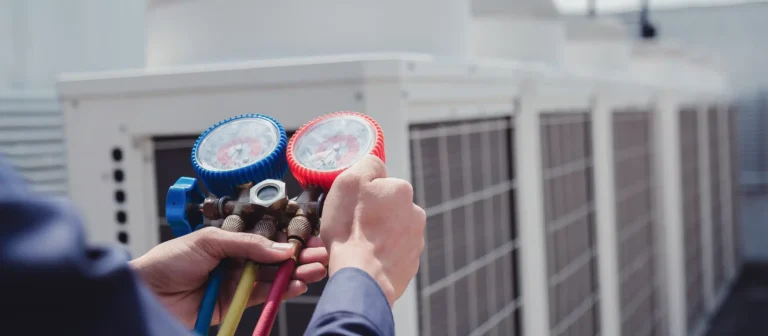
This becomes especially important when plumbing overlaps with other systems. A water heater installation may involve a gas line, venting, combustion air, electrical connections, condensate drainage, or code-required expansion tanks. A heat pump installation or hybrid water heater may require an electrician to provide a suitable circuit. If the plumbing company also operates as an air conditioning contractor, heating contractor, furnace repair service, or air conditioning repair service, ask whether those divisions are licensed for their respective trades. A company that can properly coordinate plumbing, HVAC, and electrical work can be convenient. A company that merely says “we do everything” with the confidence of a man selling sunglasses at a gas station deserves further questioning.
The same goes for lighting contractor or electrician work. A plumber should not casually modify wiring unless licensed to do so in your area. Water and electricity are already dramatic enough without improvisation.
Can you explain the likely cause, not just the repair?
You are not asking for a free engineering dissertation. You are asking whether the plumber thinks diagnostically or merely swaps parts until the problem stops complaining.
A leaking faucet may need a cartridge. Fine. But why did it fail early? Hard water? Excess pressure? Debris in the line after municipal work? A clogged kitchen drain may be full of grease, but if it clogs every six months, the issue could involve poor slope, a sagging line, undersized piping, or habits involving bacon fat that should be addressed with the seriousness of a family intervention.
Good plumbers explain causes in normal language. They might say, “Your pressure is running around 90 psi, and most homes should be closer to 50 to 70. That pressure can wear out toilet fill valves, faucet cartridges, and water heater components faster.” Or, “The roots got in through a joint in the clay line. Clearing it will restore flow, but it won’t seal the joint. We can discuss repair options once we see the camera footage.”
That kind of explanation helps you choose between a quick fix and a long-term fix. Sometimes the cheap option is perfectly sensible. If you are selling the house next month, you may not want to upgrade every shutoff valve in the county. Other times, cheap is bait. Paying for repeated drain cleaning when a collapsed sewer line needs repair is like buying new socks because your shoe has a nail in it.
How do you price the work?
Plumbing pricing can be hourly, flat-rate, or a hybrid. Each has pros and cons.
Hourly pricing may feel transparent, but it can become murky if the job takes longer than expected, parts runs are billed at full rate, or two people arrive when one might have done. Flat-rate pricing gives you a known cost before work begins, but you may not see the labor and material breakdown. Neither system is inherently virtuous. The real issue is clarity.
Ask what is included in the quote. Does it cover diagnosis, labor, parts, standard fittings, disposal, permits, cleanup, and return visits if something leaks? Is there a trip fee? Is the diagnostic fee waived if you approve the repair? Are after-hours rates different? Emergency plumbing on a Sunday evening costs more because plumbers enjoy dinner and sleep just like the rest of us, despite rumors to the contrary.
For larger projects such as plumbing repiping, water softener installation, water heater installation, or septic-related repairs, get the quote in writing. A handshake has its place, usually between people who already trust each other and are not discussing several thousand dollars of work hidden inside walls.
Here is a compact set of pricing questions worth asking before you authorize anything:
- Is the estimate fixed, or can it change once work begins?
- What conditions would cause the price to increase?
- Are permits, inspections, and disposal included?
- What payment schedule do you require?
- Do you charge separately for diagnosis or travel?
That is one of the few times a list earns its keep. Money gets weird when nobody writes it down.
Will this job need a permit?
Permits are not glamorous. Nobody invites friends over to admire a permit. Yet permits exist because plumbing mistakes can contaminate water, leak sewage, create carbon monoxide hazards, or quietly rot framing.
Not every repair needs one. Replacing a faucet, clearing a drain, fixing a minor leak, or swapping a toilet usually does not require a permit in many areas. Bigger work often does. Water heater replacement, gas line installation, sewer line replacement, major repiping, bathroom additions, and certain backflow or septic system work may require permits and inspections, depending on local rules.
Ask the plumber whether the job requires a permit and who will obtain it. If the answer is, “Technically yes, but nobody bothers,” pause. Sometimes local practices are more casual than written rules, but you should not be pushed into dodging code to make the job easier. If an unpermitted installation causes problems during a home sale or insurance claim, the savings can evaporate faster than water on a summer sidewalk.
Water heaters deserve special mention. A sloppy water heater installation can create serious hazards, especially with gas units. Venting, temperature and pressure relief discharge, seismic strapping where required, expansion control, gas connections, combustion air, and drain pans all matter. A proper installation may not look exciting, but it should look intentional. If the old unit was wrong, the new one should not simply repeat the mistake with shinier metal.
What are the options, and what would you do in your own house?
This question is unfair in the best way. It invites practical judgment.
Most plumbing problems have more than one solution. A leaking section of galvanized pipe might be patched, partially replaced, or treated as evidence that the rest of the system is nearing retirement. A failing water heater might be repaired, replaced with a similar tank, upgraded to tankless, or swapped for a heat pump model if the space, electrical service, climate, and usage patterns make sense. A hard water problem might call for targeted fixture maintenance, a water softener installation, or changes to water heater maintenance.
The right plumber will discuss trade-offs. They may say, “I can repair this water heater, but it’s 11 years old and the tank is showing rust at the base. If it were mine, I would not put much money into it.” Or, “The clog is cleared, and the camera shows roots about 35 feet out. You could schedule annual rooter service and monitor it, or we can price a spot repair. I wouldn’t hydrojet this line until we confirm the pipe condition because it looks brittle.”
That phrase, “if it were mine,” is not magic. Some people will still upsell with a hand over their heart. But it often reveals whether the technician understands budgets, risk tolerance, and the difference between necessary work and nice-to-have work.
How will you protect my home while working?
Plumbing is messy. That does not mean your home should look like a raccoon hosted a workshop.
Ask how the plumber protects floors, cabinets, walls, and landscaping. For interior work, shoe covers, drop cloths, mats, buckets, vacuum cleanup, and careful access cuts are basic professionalism. For drain cleaning, the area around cleanouts and fixtures should be protected because old drain water has a way of reminding everyone why civilization invented traps.
For larger jobs, ask who handles drywall, tile, paint, concrete, or landscaping restoration. Many plumbers will access pipes but not restore finishes. That is not a flaw if disclosed upfront. It becomes a flaw when your bathroom wall is open and the plumber says, “Oh, you thought we put that back?” while slowly backing toward the van.
Underground plumbing and septic system service can disturb yards, driveways, patios, and beloved shrubs with names. If excavation is possible, discuss the likely footprint. Ask whether they locate utilities before digging. In many places, utility locating is required before excavation, and for good reason. Hitting a gas, electric, water, or communication line changes the mood of a project very quickly.
What happens if something goes wrong?
Even skilled plumbers run into surprises. Old valves crumble. Cast iron cracks. A “simple” faucet replacement reveals a corroded supply line behind the cabinet. A drain cable finds a collapsed pipe instead of a clog. Homes are full of secrets, and most of them are not charming.
What separates professionals from chaos merchants is how they handle surprises. Ask about warranties on labor and parts. A common labor warranty might range from 30 days to a year depending on the job and company. Manufacturer warranties vary widely. Some water heaters carry six, nine, ten, or twelve-year tank warranties, but labor may be separate. Tankless units and heat pump equipment have their own terms. Do not assume. Ask.
Also ask how callbacks work. If the repaired leak drips the next morning, do they prioritize returning? Is there a charge? If a drain backs up again after two weeks, is that covered, or was the initial clearing not guaranteed due to pipe condition? Drain warranties can be tricky because a plumber cannot control what goes down the drain after leaving, nor can they magically heal a broken sewer line with optimism. Still, the policy should be clear.
For equipment such as water heaters, boilers, furnaces, air conditioning systems, and heat pumps, warranties often depend on proper installation and maintenance. If a company provides both plumbing and HVAC services, including air conditioning maintenance, air conditioning tune-up, air conditioning repair, furnace repair service, or heat pump installation, ask how records are kept. Good documentation helps if a manufacturer warranty claim appears later, wearing its usual expression of bureaucratic suspicion.
Are there warning signs in the estimate?
A plumbing estimate does not need to read like a novel, though frankly some of us would enjoy “The Ballad of the Worn Flapper.” It should identify the work, the price, major materials or equipment, exclusions, and warranty terms.
Vague estimates can hide trouble. “Fix plumbing issue, $2,400” is not enough. Which issue? Which fixtures? Which pipe? Which wall gets opened? What happens if the pipe continues another ten feet and looks like it was recovered from a shipwreck?
At the same time, do not expect a plumber to know the unknowable. If a pipe is buried under a slab, inside a wall, or under a driveway, the estimate may include assumptions and contingencies. That is reasonable. You want those assumptions stated plainly.
Be wary of dramatic pressure tactics. “This price is only good if you sign in the next 15 minutes” may be appropriate for a game show, not a sewer repair. Emergency work can require fast decisions, but a reputable plumber should still explain the risk, the immediate stabilization option, and the permanent repair path. If water is actively flooding, the first step may be shutting off water and stopping damage. The full repipe discussion can wait until nobody is standing in ankle-deep regret.
How do reviews and referrals fit into the decision?
Reviews help, but they require interpretation. A company with hundreds of strong reviews has probably done many things right. Still, read the details. Look for comments about punctuality, cleanliness, communication, accurate estimates, and how the company handled problems. Five-star reviews that say only “Great service!” are pleasant but not very informative. A four-star review describing a complicated job handled honestly may be more useful.
Referrals from neighbors can be gold, especially for area-specific issues. Some neighborhoods have older clay sewer lines invaded by tree roots. Others have hard water that chews through fixtures. Some have crawl spaces so tight they seem designed by a contortionist with a grudge. A plumber who knows the local housing stock can diagnose faster and recommend materials that fit the environment.
Be careful with the cheapest recommendation. Your neighbor’s “great guy who did it for half the price” might be excellent, or he might be a hobbyist with confidence and no insurance. Cheap plumbing can be wonderful when it is efficient. It is less wonderful when it becomes expensive plumbing plus mold remediation.
What should I ask during the visit?
Once the plumber arrives, the conversation changes. They can see the pipe, the fixture, the heater, the cleanout, the access, and emergency furnace repair service the collection of cleaning products under your sink that must be moved because apparently everyone stores 47 bottles there.
Let them diagnose before demanding a solution. A homeowner saying “I need hydrojetting” may be right, but they may also have a blocked p-trap. A homeowner saying “I need a new water heater” may only need a thermocouple, heating element, expansion tank, or thermostat. Tell the story, show the symptoms, then let the professional test.
During the visit, focus on questions that reveal reasoning:
- What did you find, and how confident are you?
- Is this a safety issue, a damage-prevention issue, or a convenience issue?
- What is the minimum repair that solves the immediate problem?
- What longer-term repair should I consider?
- What maintenance would prevent this from happening again?
That last question is underrated. Plumbing maintenance is not glamorous, but neither is explaining to guests that the downstairs bathroom has “personality.” Water heater flushing, anode rod checks where accessible and appropriate, drain care, pressure regulation, water softener salt management, and periodic inspections can extend the life of systems. Not every home needs the same routine, and not every task is DIY-friendly, but a good plumber will tell you what matters.
Should I hire a specialist or a multi-trade company?
This depends on the job.
For a straightforward toilet replacement, faucet repair, drain cleaning, or plumbing leak repair, a skilled plumber or plumbing company is exactly what you need. For a project touching several systems, a multi-trade company can simplify coordination. If you are replacing a gas water heater and also need electrical upgrades, ventilation corrections, and possibly HVAC condensate rerouting, having access to a plumber, electrician, heating contractor, and air conditioning contractor under one roof can reduce scheduling headaches.
The danger is assuming one company is equally strong in every trade. Ask specific questions. Who performs the gas installation service? Who handles electrical connections? If the job involves HVAC, is the person licensed for air conditioning repair service or heat pump installation? If the project includes lighting relocation after opening a wall, is there a qualified lighting contractor or electrician involved?
A true multi-trade contractor knows where one license ends and another begins. The less reliable version treats trades like toppings at a frozen yogurt shop: plumbing, heating, septic, lighting, sure, sprinkle them all on. Your job is to find out which version you are dealing with before your home becomes the test kitchen.
What about emergencies?
Plumbing emergencies compress decision-making. When water is spreading across flooring, you are not going to interview three companies over tea. Still, you can ask a few key questions while moving quickly.
First, ask whether they can talk you through shutting off water or gas if safe to do so. A reputable dispatcher may help you find the main shutoff, fixture shutoff, or water heater shutoff before the technician arrives. If gas odor is present, leave the area and contact the gas utility or emergency services according to local guidance. Do not troubleshoot gas leaks with bravery and a scented candle.
Second, ask about emergency rates before dispatch. After-hours service costs more, but you should know the fee structure. Third, ask whether the goal of the emergency visit is temporary stabilization or complete repair. Sometimes the right move at midnight is to stop the leak, cap a line, clear enough of a blockage to restore safe use, or shut down equipment until proper parts are available. Permanent repairs done when everyone is exhausted and parts houses are closed can get pricey and creative, and creative plumbing is rarely a compliment.
How do I compare multiple plumbers without losing my mind?
For non-emergency work, get two or three opinions. Not twelve. After the third estimate, many homeowners stop gathering information and start collecting anxiety.
Do not compare only the final price. Compare scope. One plumber may quote a basic water heater replacement using a standard model and minimal code corrections. Another may include a drain pan, expansion tank, new shutoff, vent corrections, permit, disposal, and warranty registration. The second quote may be higher because it includes the things the first quote will discover later with a sympathetic shrug.
For drain and sewer work, one estimate may include camera inspection and locating. Another may only include clearing. For repiping, one company may patch drywall roughly, while another excludes drywall entirely. For water softener installation, one may include bypass valves, drain routing, electrical outlet needs, startup settings, and old equipment removal. Another may include “install softener,” which is technically words but not a plan.
Ask each plumber to explain what is excluded. Exclusions are where surprises like to breed.
The quiet signs of a plumber worth hiring
Some of the best indicators are small. They listen without interrupting every eight seconds. They look at the whole situation, not just the shiny broken part. They test water pressure before replacing the third failed valve in two years. They explain when a cheaper repair is acceptable and when it is throwing good money into a wet hole. They put things in writing. They do not mock your DIY attempt, or if they do, they do it gently and only after the crisis has passed.
A good plumber also knows when to bring in another trade. If a leak has damaged wiring, call an electrician. If a condensate drain from air conditioning equipment is involved, coordinate with an air conditioning repair technician. If a furnace vent or combustion issue appears near a water heater, a heating contractor or furnace repair service may need to weigh in. If sewage backs up from beyond the house drain and the property uses a septic system, septic system service may be part of the answer. Competence includes knowing the edge of your lane.
The questions are not a trap
Good tradespeople appreciate informed customers. Not customers who hover with internet printouts and announce that a forum user named PipeDragon says the job should cost $38. Informed customers. There is a difference.
When you ask clear questions, you help the plumber give a better recommendation. You also signal that you value proper work, documentation, safety, and long-term thinking. That tends to attract the kind of professional who values those things too.
Before hiring a plumber, ask about licensing, insurance, relevant experience, who will do the work, pricing, permits, options, protection, warranties, and what happens if surprises appear. Listen not only to the answers, but to how they are delivered. The right plumber does not need to sound fancy. They need to sound grounded, specific, and willing to explain the difference between a quick patch and a proper fix.
Water is patient. It will exploit sloppy work, bad fittings, poor slope, excess pressure, and every shortcut hidden behind a wall. Hire someone who respects that. Your pipes may never send a thank-you note, but your floors, ceilings, and future self certainly will.
Name: Service Lion Plumbing Heating Air Electric
Address: 521 W Briardale Ave, Orange, CA 92865, United States
Phone: (657) 567-7305
Website: https://callservicelion.com/
Email: [email protected]
Hours:
Monday: Open 24 hours
Tuesday: Open 24 hours
Wednesday: Open 24 hours
Thursday: Open 24 hours
Friday: Open 24 hours
Saturday: Open 24 hours
Sunday: Open 24 hours
Open-location code: R48R+WV Orange, California, USA
Map/listing URL:
https://www.google.com/maps/search/?api=1&query=Google&query_place_id=ChIJQU4LBWHV3IARtnABtyykSA4
Google Map:
Socials:
https://www.facebook.com/ServiceLionCA/
https://www.youtube.com/channel/UCR_L35QzsRTxYZtX8PxJvPw
Local Service Information
Service Lion Plumbing Heating Air Electric provides plumbing, drain, heating, air conditioning, and electrical services from its Orange, California location.The company serves homeowners and properties throughout Orange and communities across Orange County and surrounding areas.
Available services include plumbing repairs, water heater work, drain and sewer services, heating and cooling service, electrical repairs, panels, lighting, outlets, and related home-system work.
Service is available for residential properties as well as light commercial needs described within the company's local service-area information.
The company's website emphasizes locally operated service, coordinated home-system support, and practical scheduling for plumbing, HVAC, and electrical needs.
The matching public business listing shows the Orange location as open 24 hours a day, seven days a week.
For service information or scheduling, call (657) 567-7305 or visit https://callservicelion.com/.
The public map listing identifies the business at 521 W Briardale Ave, Orange, CA 92865 and can be used for location and direction information.
Popular Questions About Service Lion Plumbing Heating Air Electric
What services does Service Lion Plumbing Heating Air Electric provide?
The company provides plumbing, drain and sewer, heating, air conditioning, and electrical services. Its published services include plumbing repair, water heaters, drain clearing, sewer work, HVAC repair and installation, electrical repairs, panels, circuit breakers, lighting, outlets, and related services.
Where is Service Lion Plumbing Heating Air Electric located?
The matching business location is 521 W Briardale Ave, Orange, CA 92865, United States.
What areas does Service Lion Plumbing Heating Air Electric serve?
The company serves Orange County and surrounding communities. Its published service-area information includes Orange, Anaheim, Brea, Yorba Linda, Fullerton, Huntington Beach, Newport Beach, Costa Mesa, Irvine, Lake Forest, and additional nearby cities.
Is Service Lion Plumbing Heating Air Electric open 24 hours?
The matching public business listing shows the location as open 24 hours on Monday through Sunday.
Does Service Lion Plumbing Heating Air Electric work on drains and sewer lines?
Yes. Published services include drain clearing, rooter service, camera inspection, hydro jetting, sewer line repair and installation, water line work, slab leak detection, and trenchless sewer line repair.
Does Service Lion Plumbing Heating Air Electric provide heating and air conditioning service?
Yes. Its published HVAC services include air conditioning repair and installation, heating service, furnace work, heat pumps, air ducts, indoor air quality assessments, and thermostat installation.
Does Service Lion Plumbing Heating Air Electric provide electrical service?
Yes. Published electrical services include repairs and installations, electrical panels, circuit breakers, safety inspections, lighting, outlets and switches, surge protection, generators, and EV charging equipment installation.
How can I contact Service Lion Plumbing Heating Air Electric?
Call (657) 567-7305.
Email: [email protected]
Website: https://callservicelion.com/
Facebook: https://www.facebook.com/ServiceLionCA/
Landmarks Near Orange, California
Old Towne Orange Historic District
A central historic district and useful geographic reference point for the Orange community.
Plaza Park
A well-known public gathering point in the center of Old Towne Orange.
Orange Public Library & History Center
A civic landmark serving residents near central Orange.
Hart Park
A major public park and recreation area south of central Orange.
Eisenhower Park
A public park serving neighborhoods in northern Orange.
Santiago Oaks Regional Park
A regional recreation and open-space landmark on the eastern side of Orange.
Irvine Regional Park
A large regional park and recognizable reference point east of the city.
Orange Park Acres
A distinctive residential community and service-area reference point in eastern Orange.
El Modena
An established Orange neighborhood that provides a practical local coverage reference.
Glassell Street
One of the city's principal north-south streets and a useful route through central Orange.
Lincoln Avenue
A major east-west roadway serving northern Orange and nearby communities.
State Route 55
A primary regional freeway connecting Orange with other parts of Orange County.